Our Fare Share 66: Getting Our Kicks from Chicago to Santa Monica
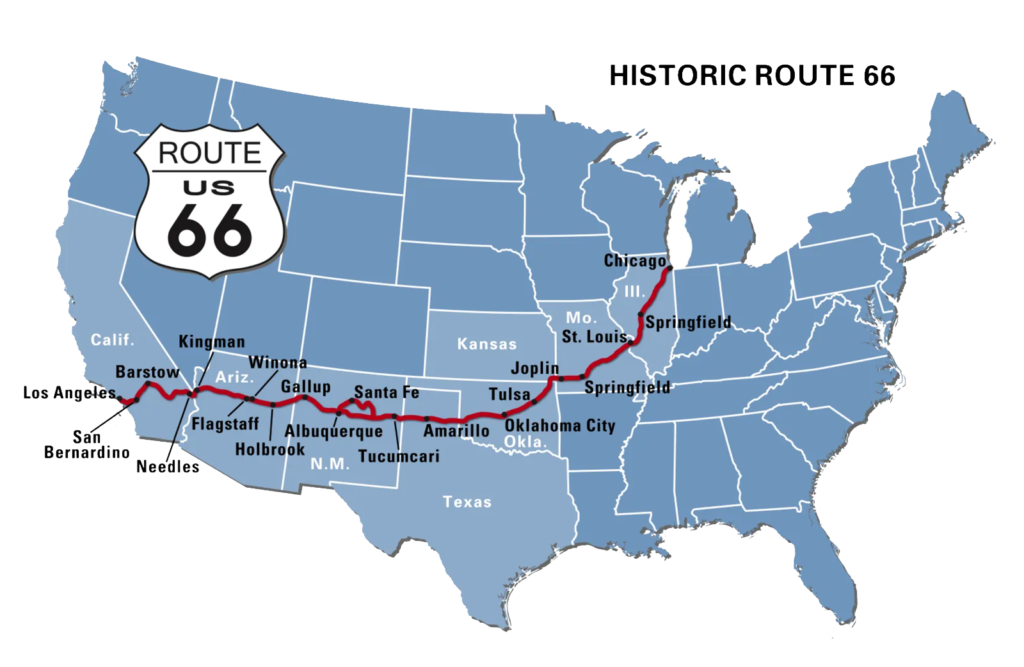
Whether you're a seasoned "roadie" or a virtual traveler, Route 66 is the ultimate time capsule of the American spirit. Established in 1926 as one of the nation's first continuous highways, this 2,448-mile stretch—famously dubbed "The Mother Road" by John Steinbeck—was the literal path to the American Dream. It carried Dust Bowl refugees seeking a better life in the West and later became a neon-lit playground for mid-century families in wood-paneled station wagons. From the urban canyons of Chicago through the rolling Ozarks and the sun-bleached Mojave, the route stitched together small-town America, birthing the very concept of the roadside attraction and the classic diner culture we still crave today.
In 2026, Route 66 is officially celebrating its Centennial, and it’s more vibrant than ever! Though it was decommissioned from the federal highway system in 1985, the road refused to fade away, thanks to a massive grassroots preservation movement. Today, it operates as a "Living Museum," where you can still sleep in a concrete tipi, grab a soda from a station with over 700 flavors, and see the original neon signs buzzing back to life. Whether you’re standing on a corner in Winslow or spray-painting a Cadillac in Texas, the Mother Road reminds us that while the destination is great, the magic is found in the quirky, slow-paced journey in between. Grab your shades and settle in—we’re recapping every mile of our legendary trek down the Mother Road.
Illinois
Kicking Thing Off
Total Miles Traveled 301
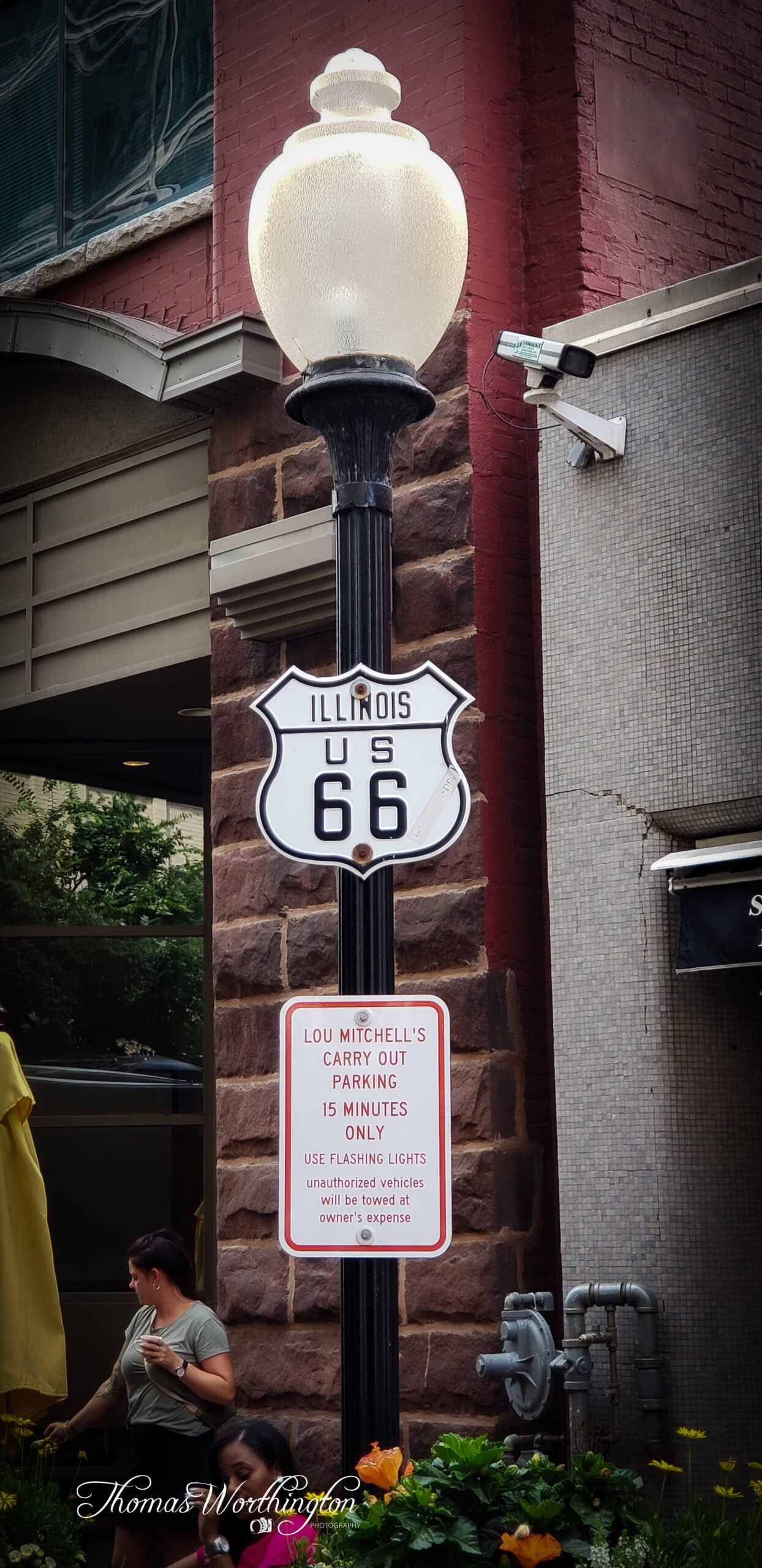
Begin Route 66 Sign (Chicago)
The journey kicks off at the intersection of East Adams Street and South Michigan Avenue, where the Begin Route 66 sign stands as a humble beacon for cross-country dreamers. Originally, the route’s starting point shifted slightly due to changing traffic patterns in the 1920s and 50s, but this iconic marker remains the definitive "photo op" for travelers. Today, it serves as the official handshake between the urban skyline of Chicago and the open road ahead, usually surrounded by tourists from every corner of the globe readying their odometers.The journey kicks off at the intersection of East Adams Street and South Michigan Avenue, where the Begin Route 66 sign stands as a humble beacon for cross-country dreamers. Originally, the route’s starting point shifted slightly due to changing traffic patterns in the 1920s and 50s, but this iconic marker remains the definitive "photo op" for travelers. Today, it serves as the official handshake between the urban skyline of Chicago and the open road ahead, usually surrounded by tourists from every corner of the globe readying their odometers.
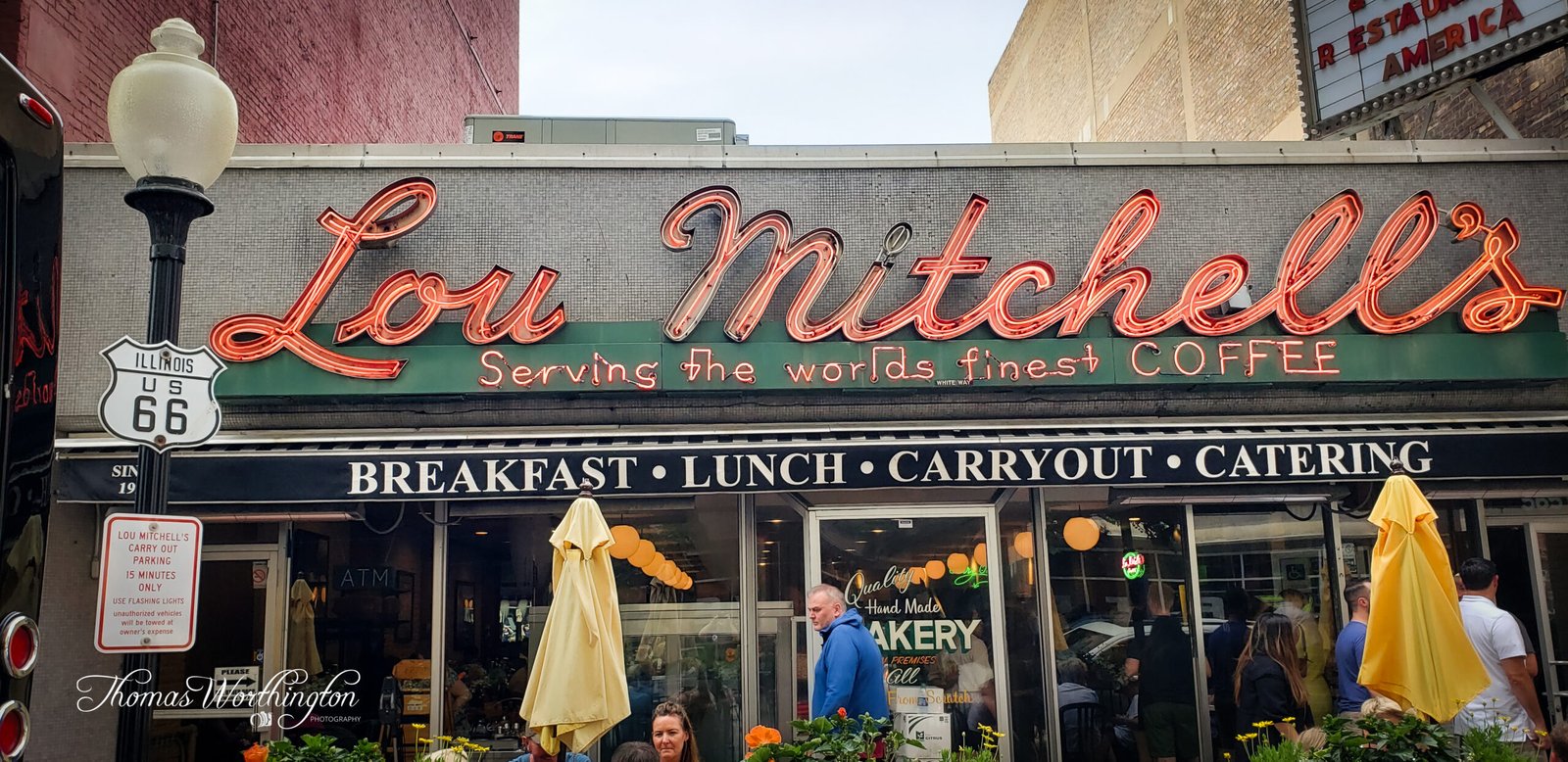
Lou Mitchell’s (Chicago)
Serving "the world’s finest coffee" since 1923, Lou Mitchell’s is practically the kitchen of the Mother Road. It gained its legendary status by handing out Milk Duds to ladies and children and fresh donut holes to those waiting in line—a tradition that persists a century later. While the menu has modernized slightly, the vintage diner feel remains perfectly intact, cementing its role as the essential breakfast fuel-up before leaving the Windy City limits.
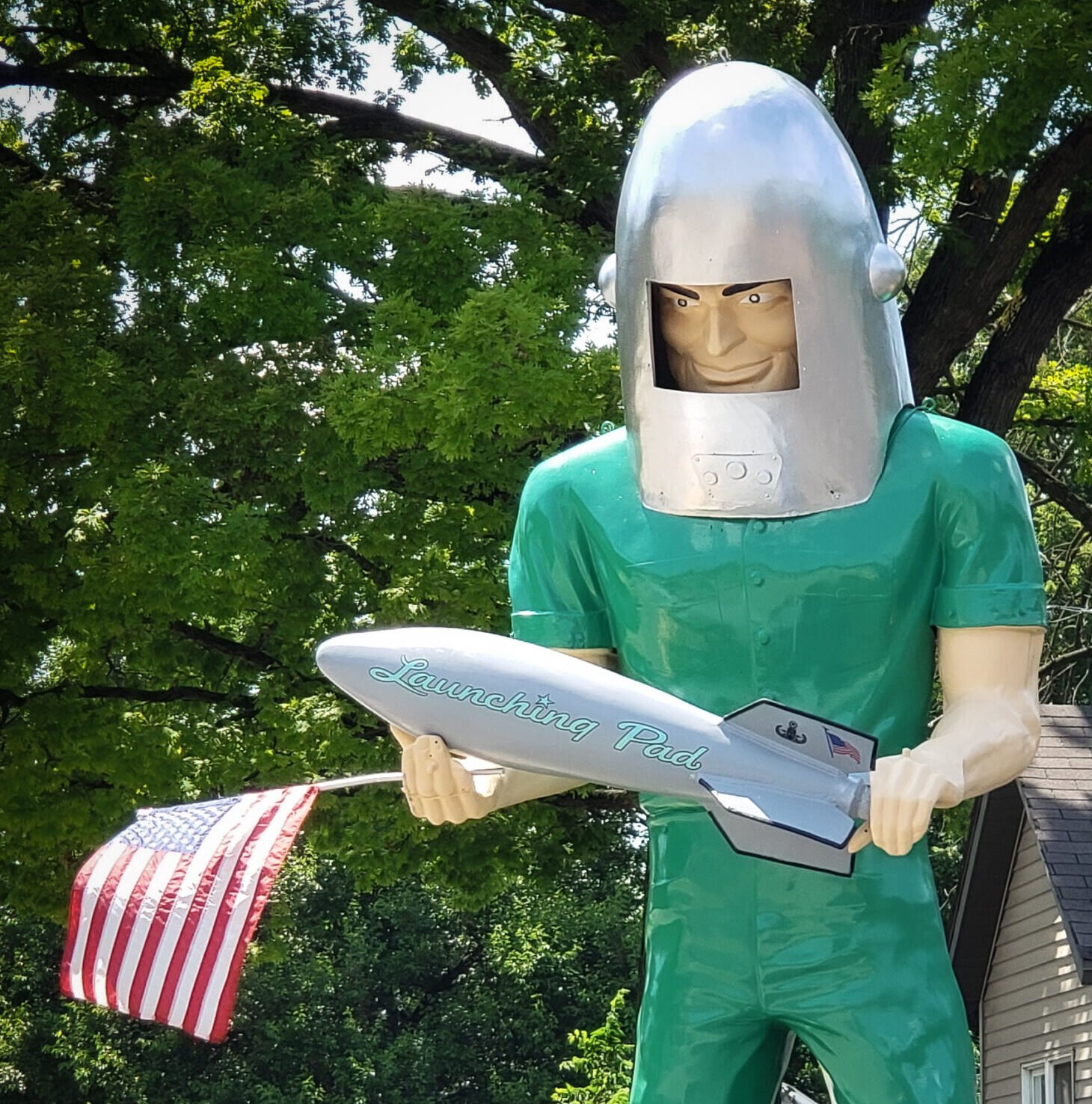
Gemini Giant (Wilmington)
Standing guard outside the Launching Pad Drive-In, the Gemini Giant is a 28-foot-tall fiberglass relic from the "Muffler Man" era of the 1960s. Named after the Gemini space program, this green-suited astronaut holding a silver rocket symbolized America’s Space Age optimism. After a period of neglect and a high-profile auction in recent years, the Giant has been preserved by passionate locals, ensuring this kitschy titan continues to tower over Wilmington for a new generation of road trippers.
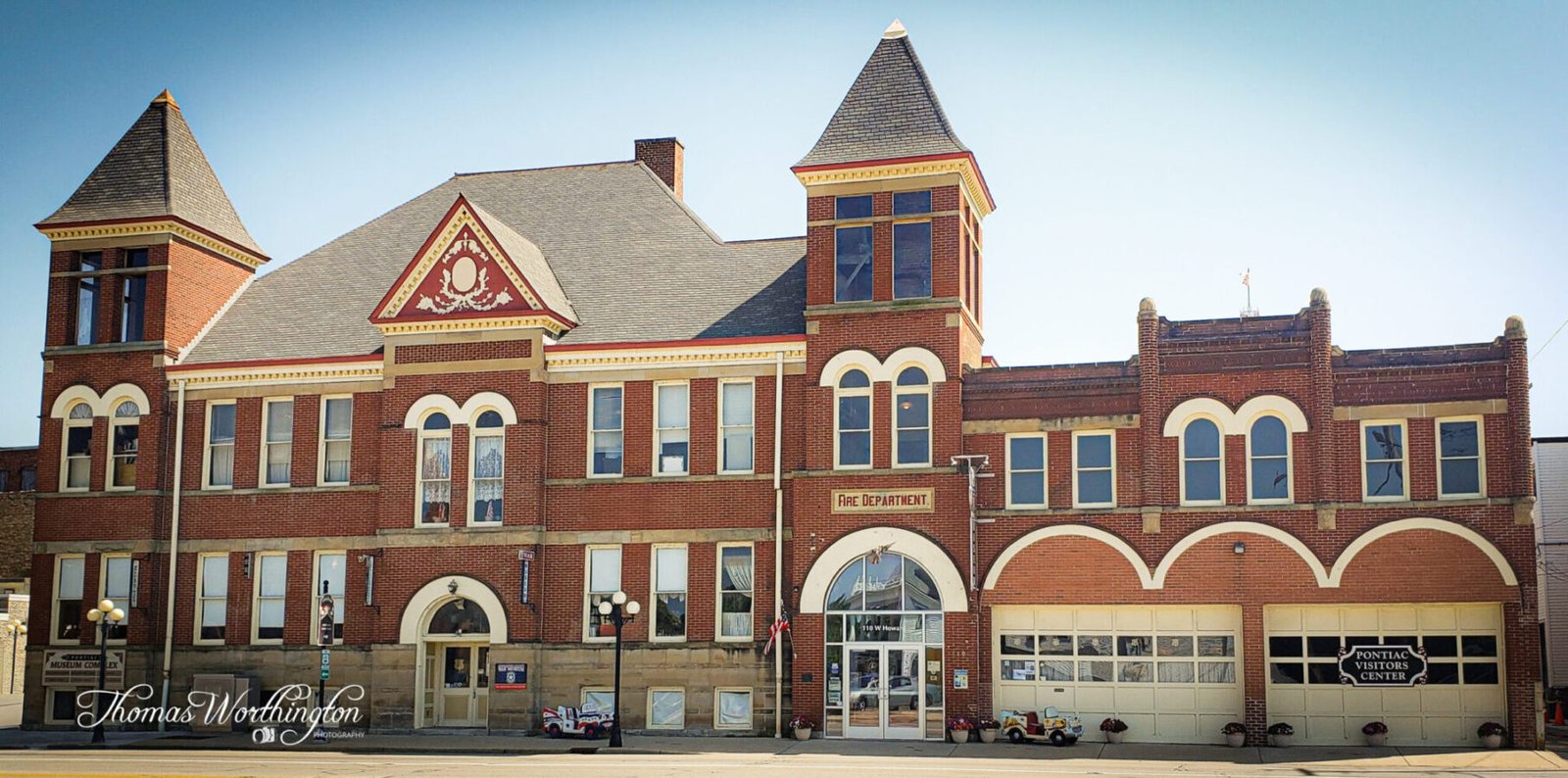
Route 66 Association Hall of Fame (Pontiac)
Housed in a historic fire station, this museum is a treasure trove of road memorabilia, but its crown jewel is the 1972 Volkswagen bus once owned by Bob Waldmire. Waldmire was an itinerant artist whose detailed maps and nomadic lifestyle inspired the character "Fillmore" in Pixar’s Cars. Today, the Hall of Fame serves as the emotional heart of the Illinois stretch, meticulously documenting the lives of the people who kept the road alive during its "forgotten" years.
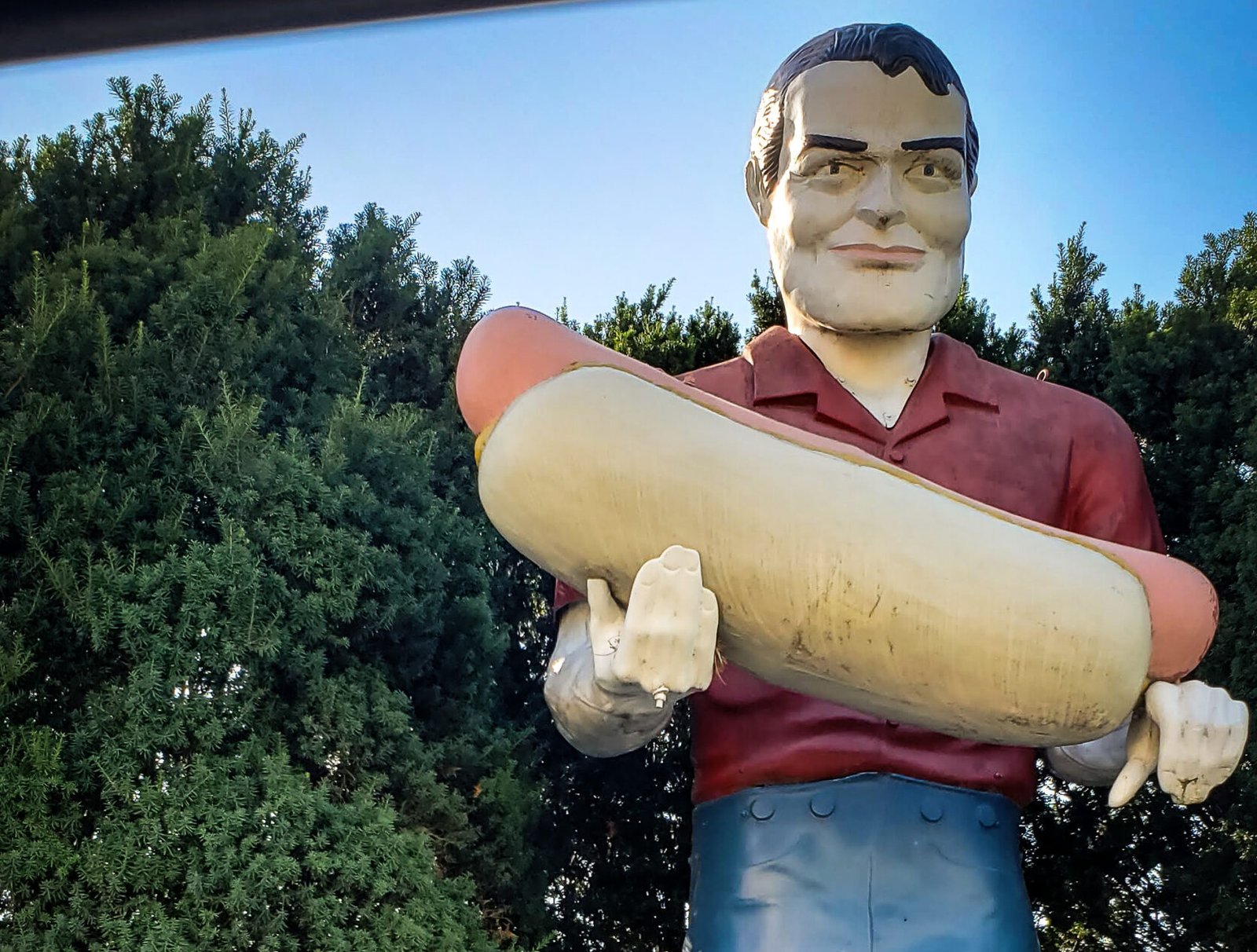
Cozy Dog Drive-In (Springfield)
The Cozy Dog Drive-In is the ancestral home of the hot dog on a stick, perfected by Ed Waldmire Jr. in the 1940s. Its "batter-dipped" history began at the USO during WWII before finding a permanent home in Springfield in 1949. Now run by the third generation of the Waldmire family, the drive-in is part restaurant, part museum, still serving the same secret-recipe corn dogs to travelers who come for the snack and stay for the deep-rooted nostalgia.
Missouri
Total Miles Traveled 317
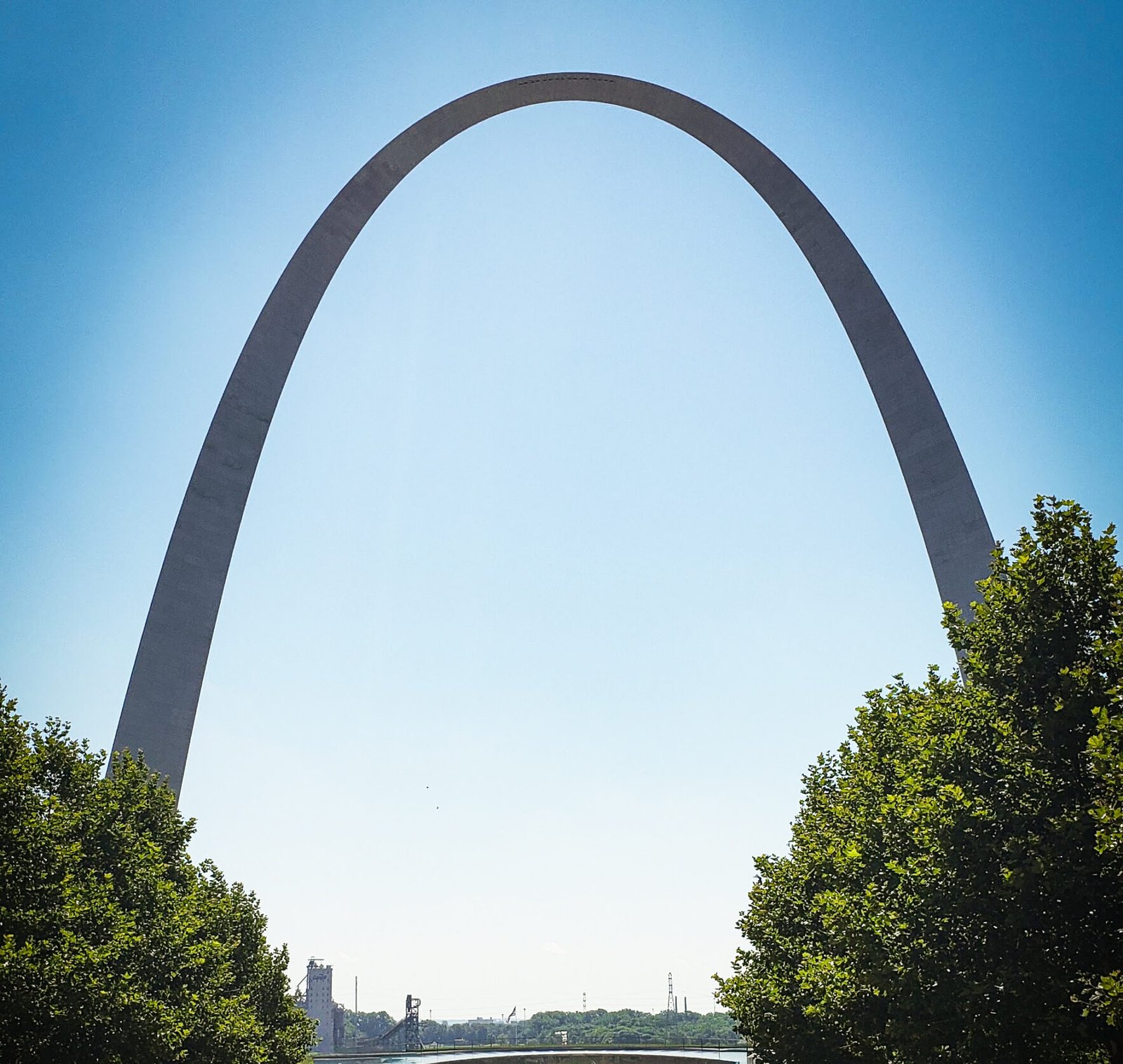
Gateway Arch (St. Louis)
Completed in 1965, the Gateway Arch is a 630-foot stainless steel marvel designed by Eero Saarinen to honor the westward expansion of the United States. While not strictly a "roadside attraction," it has defined the St. Louis skyline for Route 66 travelers for decades. Today, the tram ride to the top remains a rite of passage, offering a bird’s-eye view of the Mississippi River and the road winding toward the Ozarks.
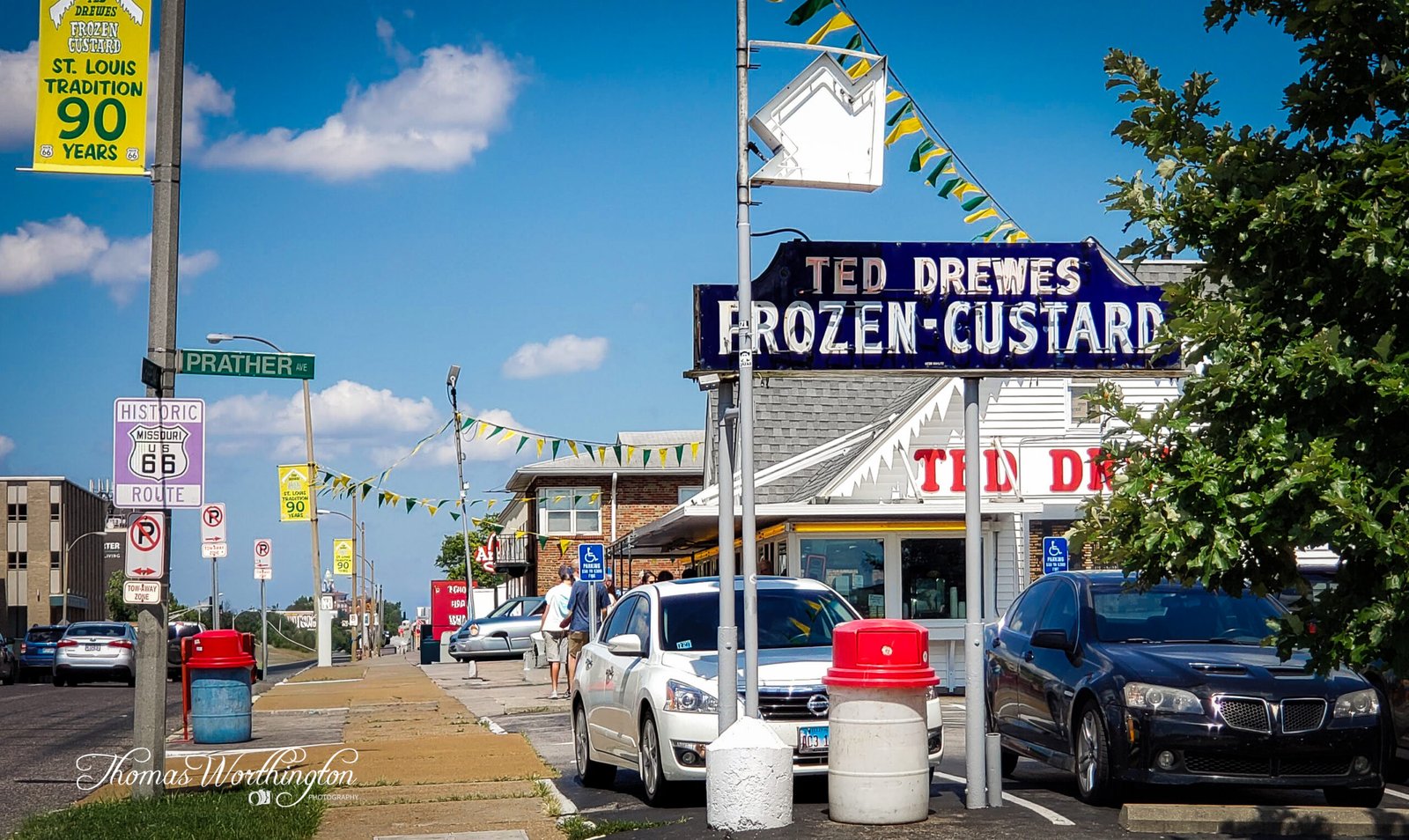
Ted Drewes Frozen Custard
This is a legendary institution on historic Route 66 in St. Louis, Missouri, and has become a quintessential stop for travelers and locals alike. Since 1941, the flagship location on Chippewa Street has served as a landmark destination, famously known for its rich, velvety frozen custard and the invention of the "concrete." This signature treat is so thick that it is traditionally served upside down to prove its density, a display of quality that has delighted customers since 1959. Whether you are grabbing a classic flavor or one of their many creative specialty combinations, visiting Ted Drewes offers a nostalgic slice of American road-trip culture that has been a beloved family tradition for generations.
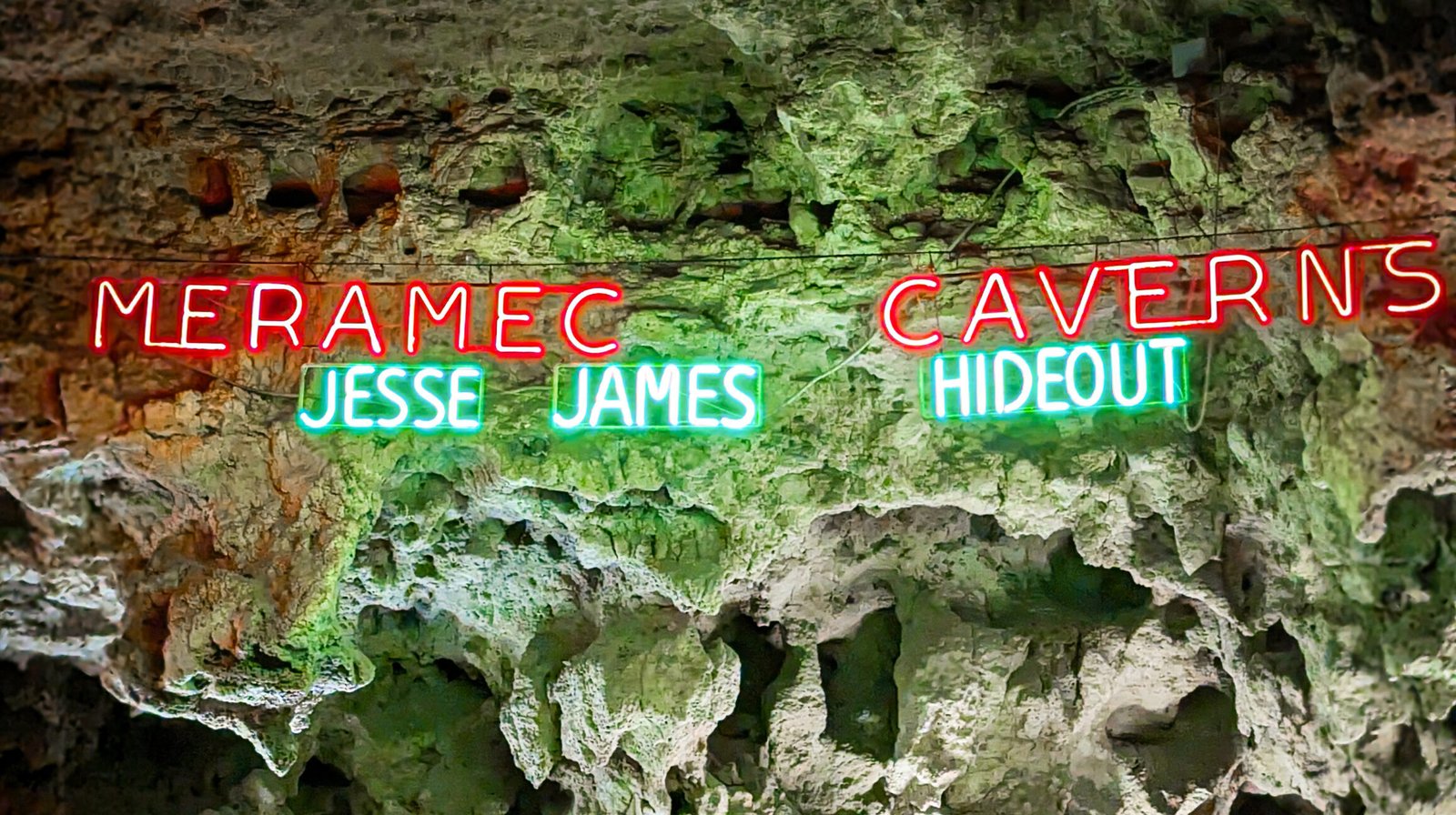
Meramec Caverns (Stanton)
Meramec Caverns became a household name thanks to Lester Dill, a marketing genius who began painting "See Meramec Caverns" on barn roofs across the Midwest in the 1930s. Legend has it the cave served as a hideout for the outlaw Jesse James in the 1870s. Modern visitors can still explore the massive limestone formations and the "Stage Curtain" wall, all while soaking in the vintage commercialism that made it a premier Route 66 stop.
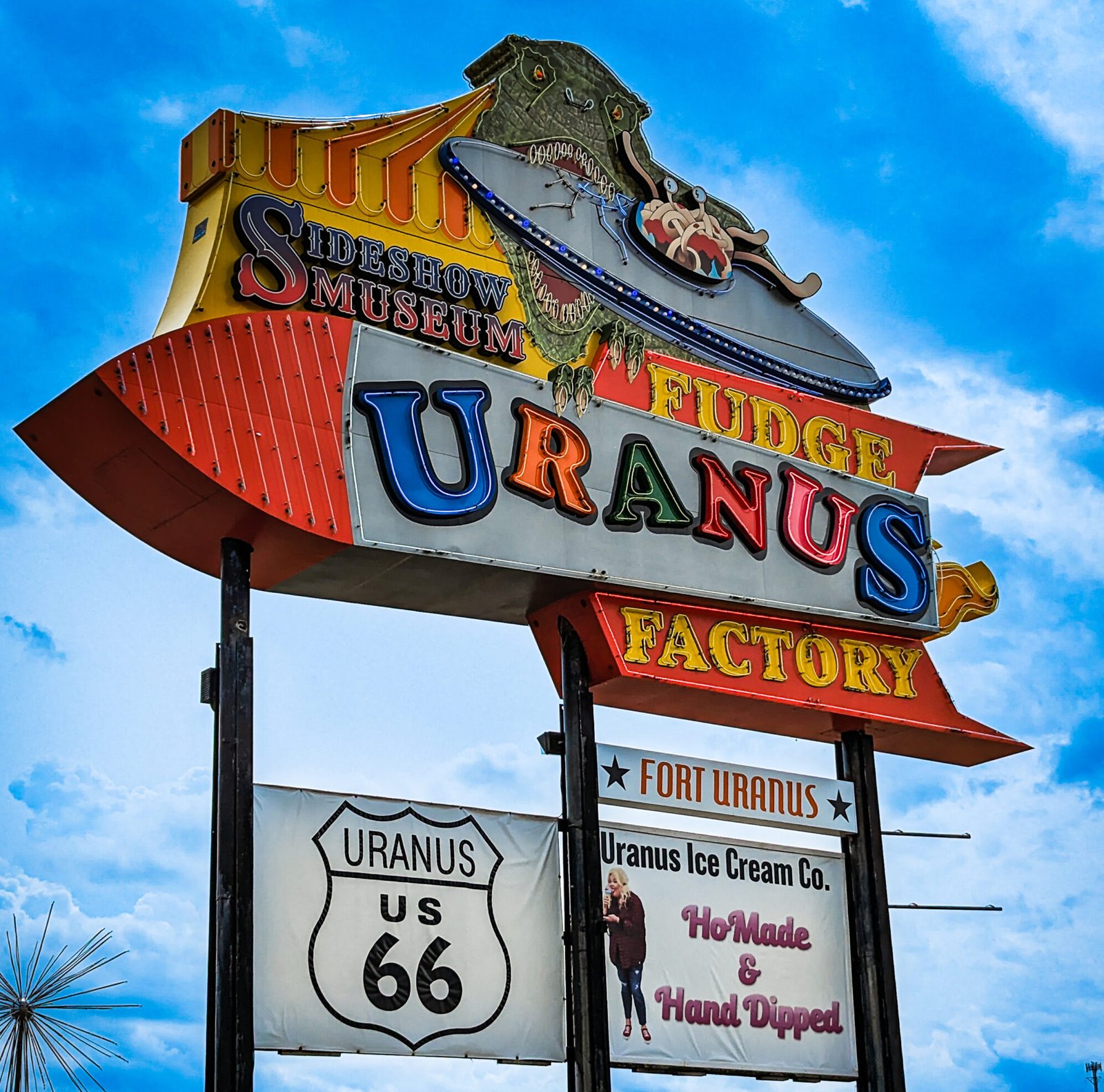
Uranus Fudge Factory (St. Robert)
A much newer addition to the route, the Uranus Fudge Factory leans heavily into "punny" humor and kitschy roadside spectacle. What started as a small shop has exploded into a destination featuring a sideshow museum, an axe-throwing range, and the "World's Largest Belt Buckle." It represents the modern, playful side of the Mother Road—a place where the goal is simply to make travelers laugh and leave with a box of chocolate.
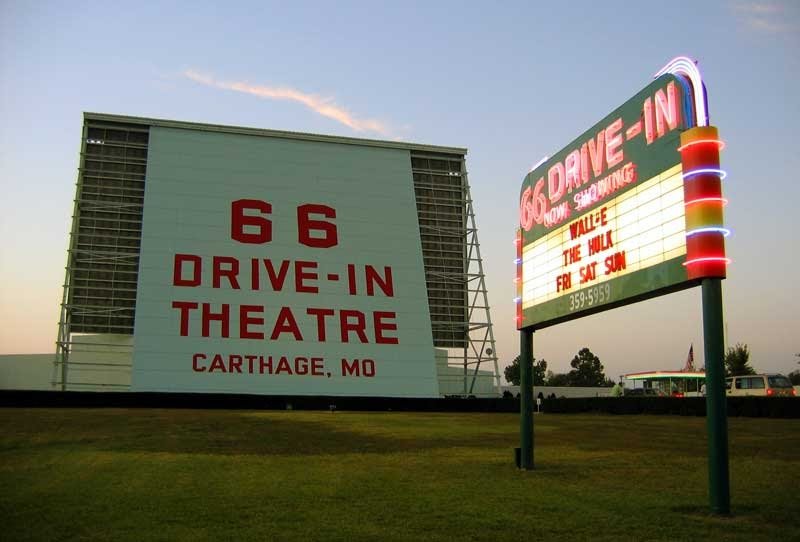
S66 Drive-In Theatre (Carthage)
Opening in 1949, the 66 Drive-In Theatre flourished during the post-war cinema boom before shuttering in the 1980s. It was lovingly restored and reopened in the late 90s, complete with its original neon sign and 66-foot wide screen. It remains one of the few places left in America where you can experience a double feature from the comfort of your car, maintaining the authentic mid-century atmosphere of a Missouri summer night.
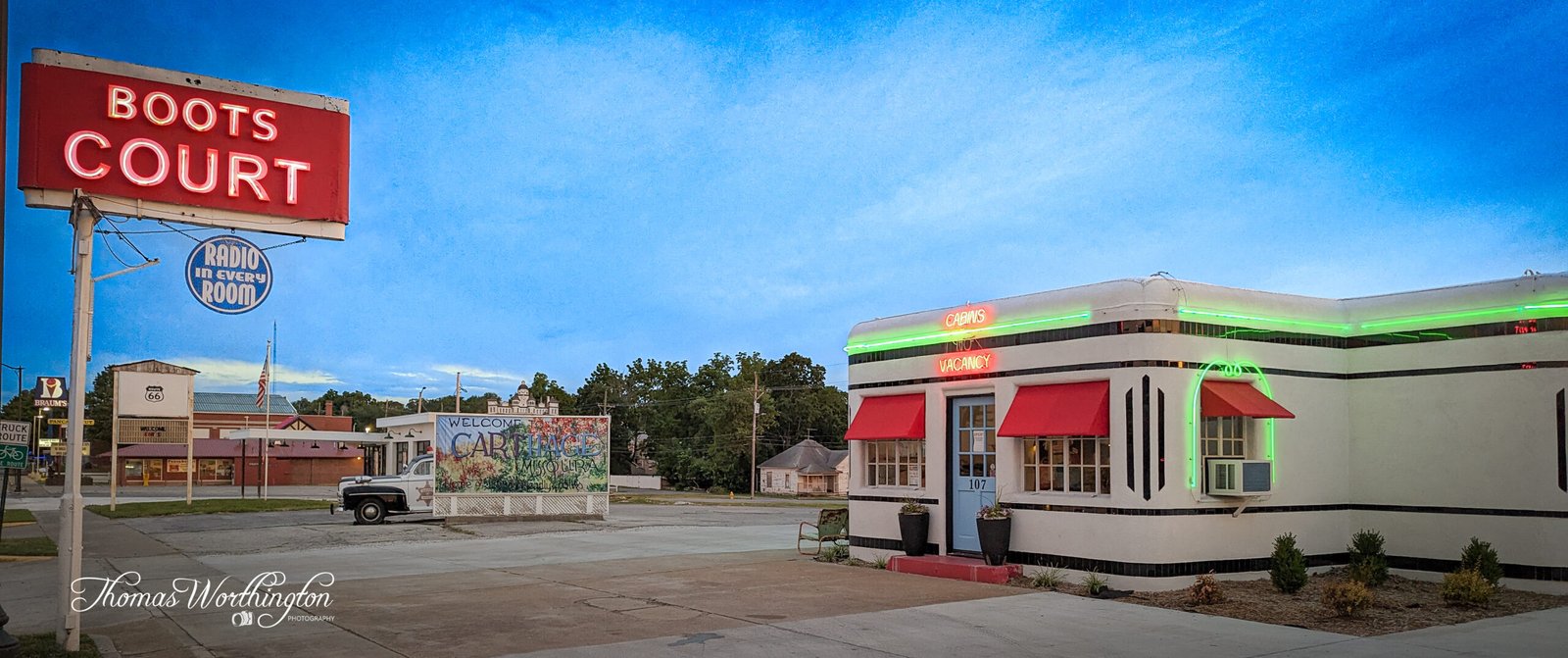
Boots Motel (Carthage)
The historic Boots Court Motel, built in 1939 by Arthur Boots, is a masterclass in Streamline Moderne architecture located at the "Crossroads of America" in Carthage, Missouri. Famed for its "a radio in every room" slogan, the motel once hosted legendary guest Clark Gable, who famously preferred Room #6. Recently restored to its original flat-roofed appearance, the property remains one of the most authentic and oldest operating motor courts along the entire length of Route 66.
Kansas
Total Miles Traveled 13
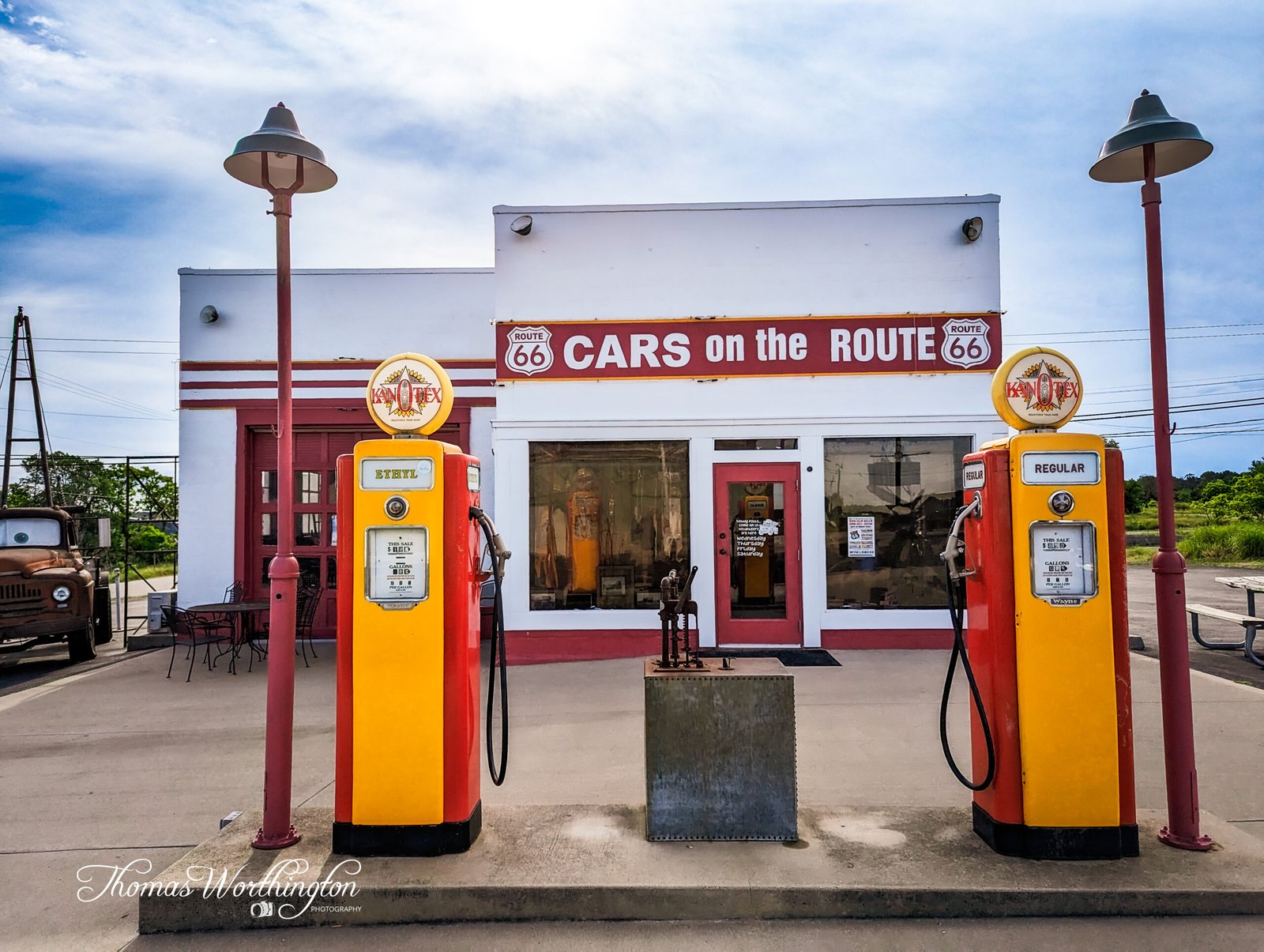
Cars on the Route (Galena)
Located in a restored 1934 Kan-O-Tex service station, this stop was originally known as "4 Women on the Route." It gained international fame for housing the 1951 International boom truck that served as the direct inspiration for Tow Mater in the movie Cars. Today, the station is a friendly cafe and souvenir shop that has breathed new life into Galena, turning a tiny stretch of Kansas pavement into a must-see movie pilgrimage.
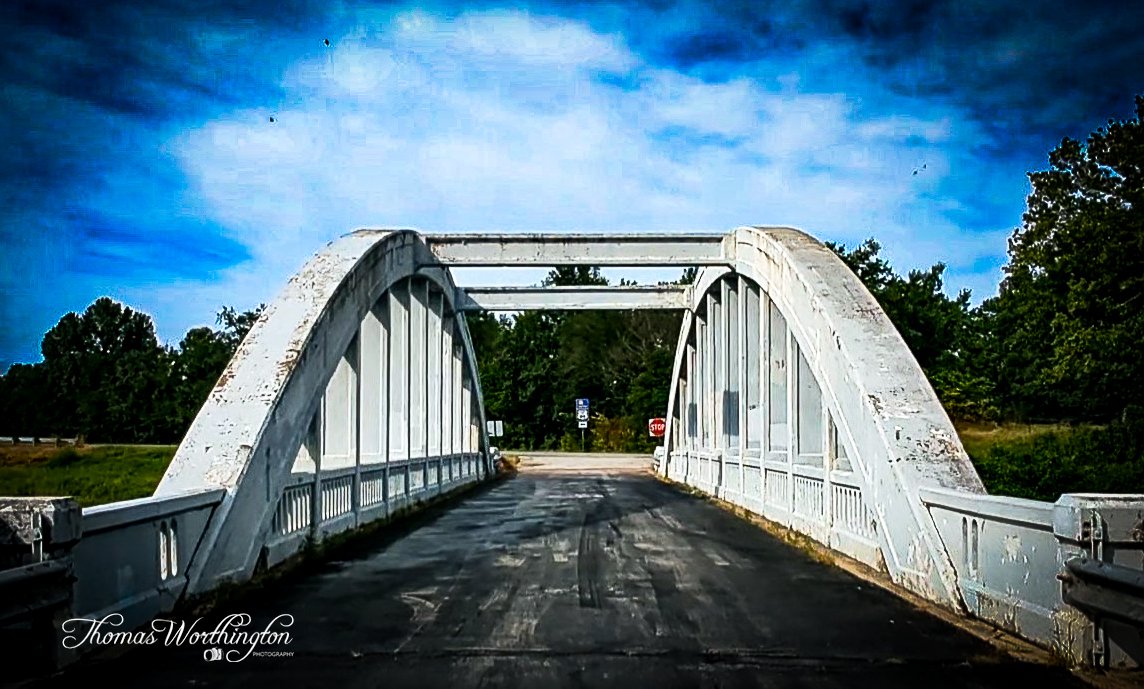
Rainbow Bridge (Baxter Springs)
The Rainbow Bridge is the last remaining Marsh Arch bridge on the entire length of Route 66. Built in 1923, its elegant white curves were once a common sight along the highway, but most were demolished as vehicles grew larger and heavier. Now bypassed by a modern bridge but preserved for light traffic and photo opportunities, it stands as a graceful reminder of early 20th-century civil engineering.
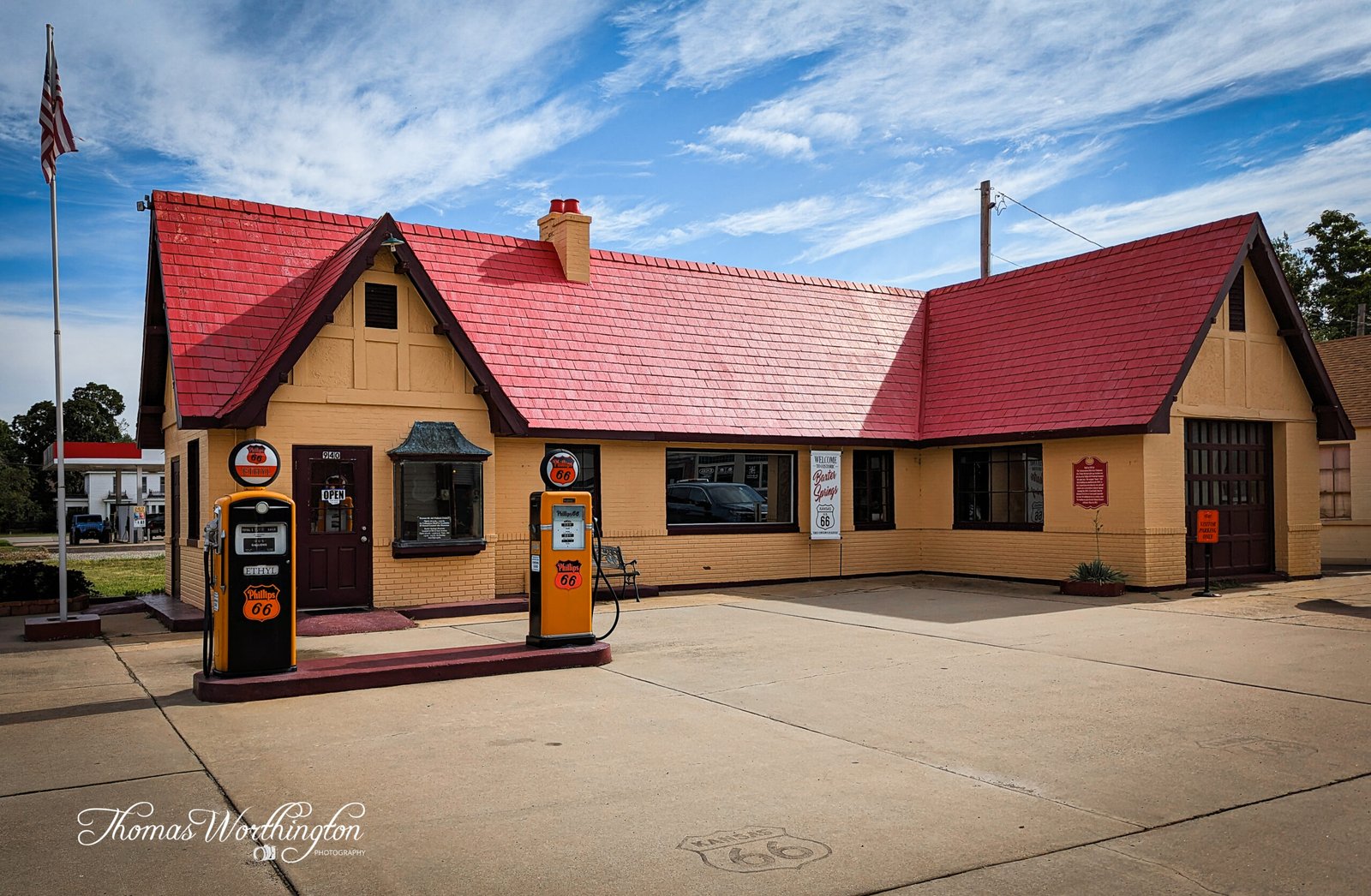
Baxter Springs Independent Oil and Gas Service Station
The Baxter Springs Independent Oil and Gas Service Station, located in Baxter Springs, Kansas, is a beautifully preserved example of a "cottage-style" gas station built in 1930. Designed in the Tudor Revival style to blend into residential neighborhoods, it became a Phillips 66 station just a year later and operated under that brand until 1958. Today, this National Register of Historic Places landmark serves as the official Kansas Route 66 Visitor Center, welcoming travelers to the state's short but historic 13-mile stretch of the Mother Road
Oklahoma
Total Miles Traveled 432
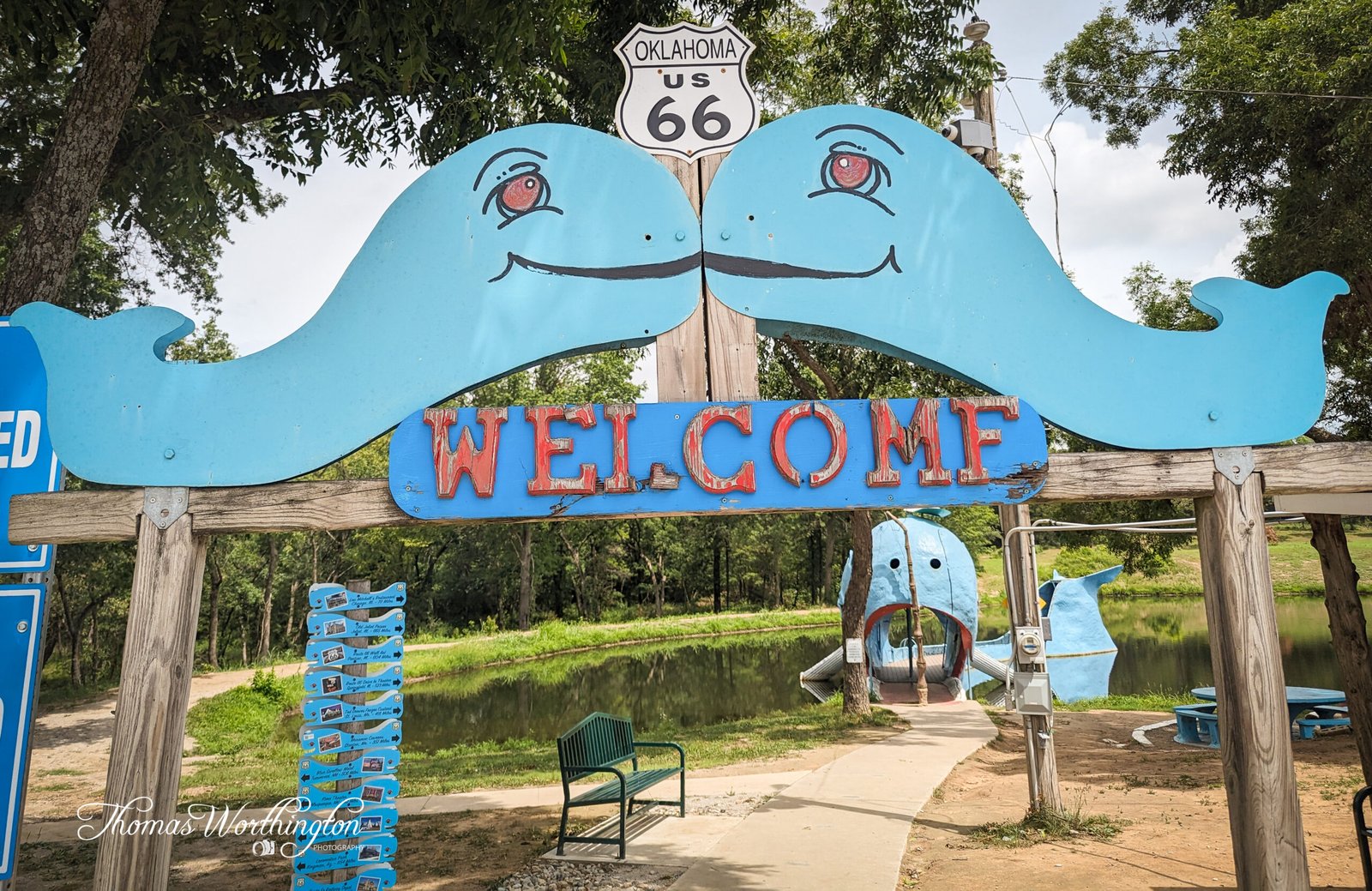
Blue Whale of Catoosa
Built in the early 1970s by Hugh Davis as an anniversary gift for his wife, the Blue Whale was originally a swimming hole for local children. After falling into disrepair following Davis’s death, the community rallied to restore the smiling cetacean. It no longer allows swimming, but the park remains a favorite picnic spot and a quintessential example of the "folk art" attractions that define the spirit of the route.
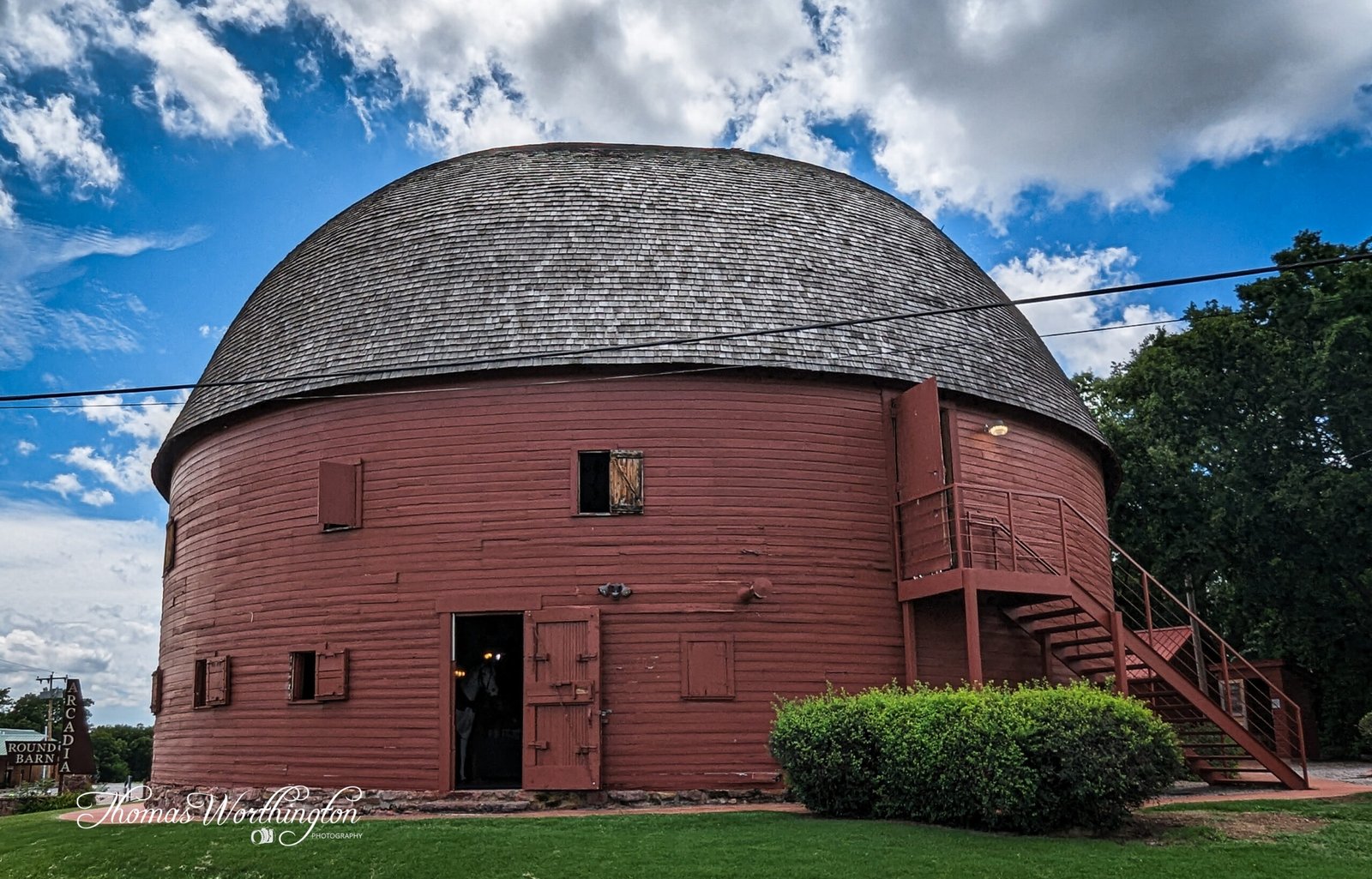
Arcadia Round Barn
The Arcadia Round Barn was a feat of carpentry when it was built in 1898, using soaked green oak to create its perfectly circular walls. After the roof collapsed in 1988, a group of retirees known as "The Over-the-Hill Gang" spent years meticulously rebuilding it. Today, it functions as a museum and community center, standing as a testament to Oklahoman resilience and the beauty of rural architecture.
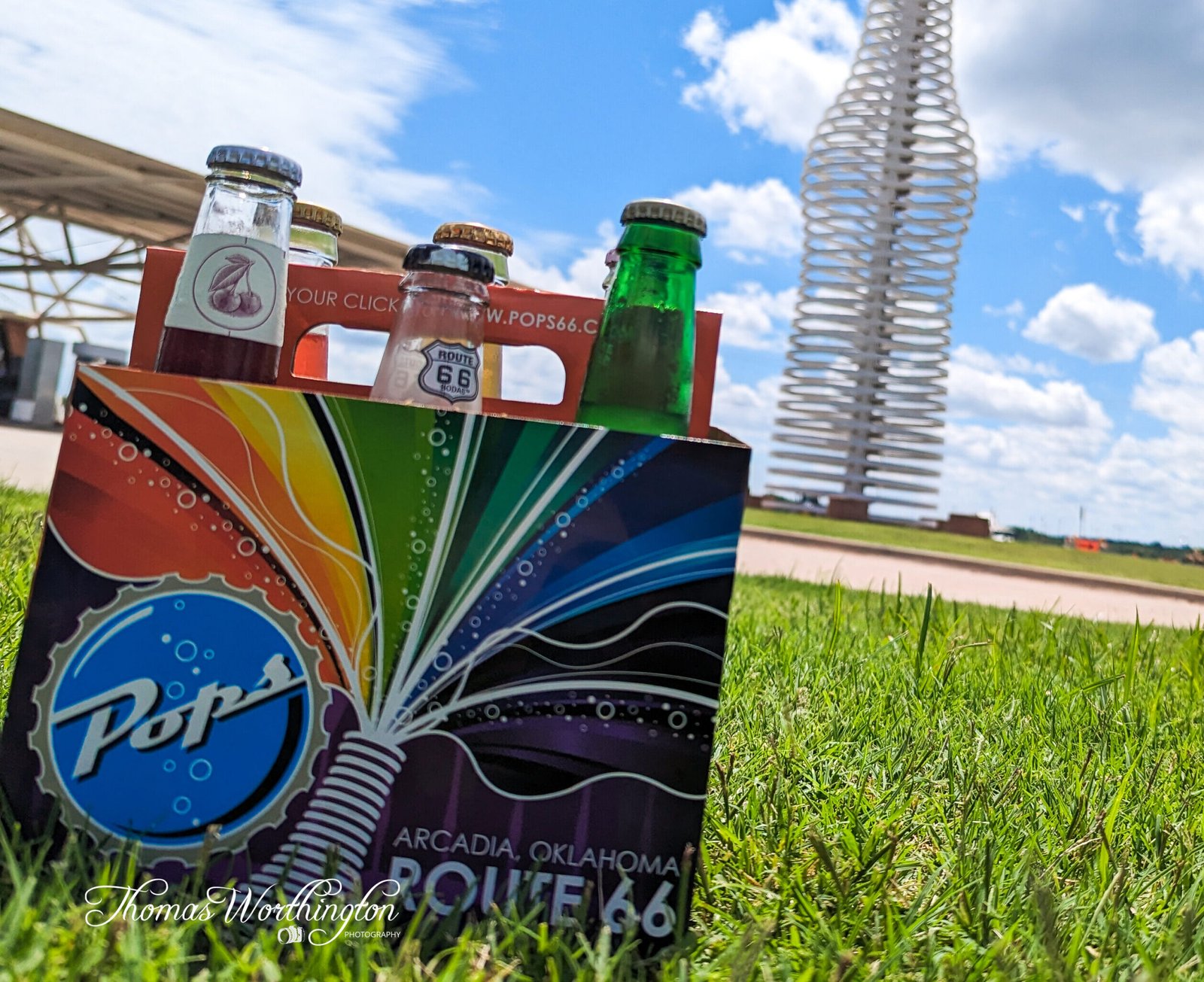
Pops 66 Soda Ranch (Arcadia)
A modern landmark, Pops opened in 2007 and instantly became famous for the 66-foot-tall LED soda bottle that glows neon colors at night. Inside, the "ranch" stocks over 700 varieties of soda from around the world. It’s a brilliant example of how new businesses are carrying the Route 66 torch, blending high-concept architecture with the classic roadside appeal of a cold drink.A modern landmark, Pops opened in 2007 and instantly became famous for the 66-foot-tall LED soda bottle that glows neon colors at night. Inside, the "ranch" stocks over 700 varieties of soda from around the world. It’s a brilliant example of how new businesses are carrying the Route 66 torch, blending high-concept architecture with the classic roadside appeal of a cold drink.
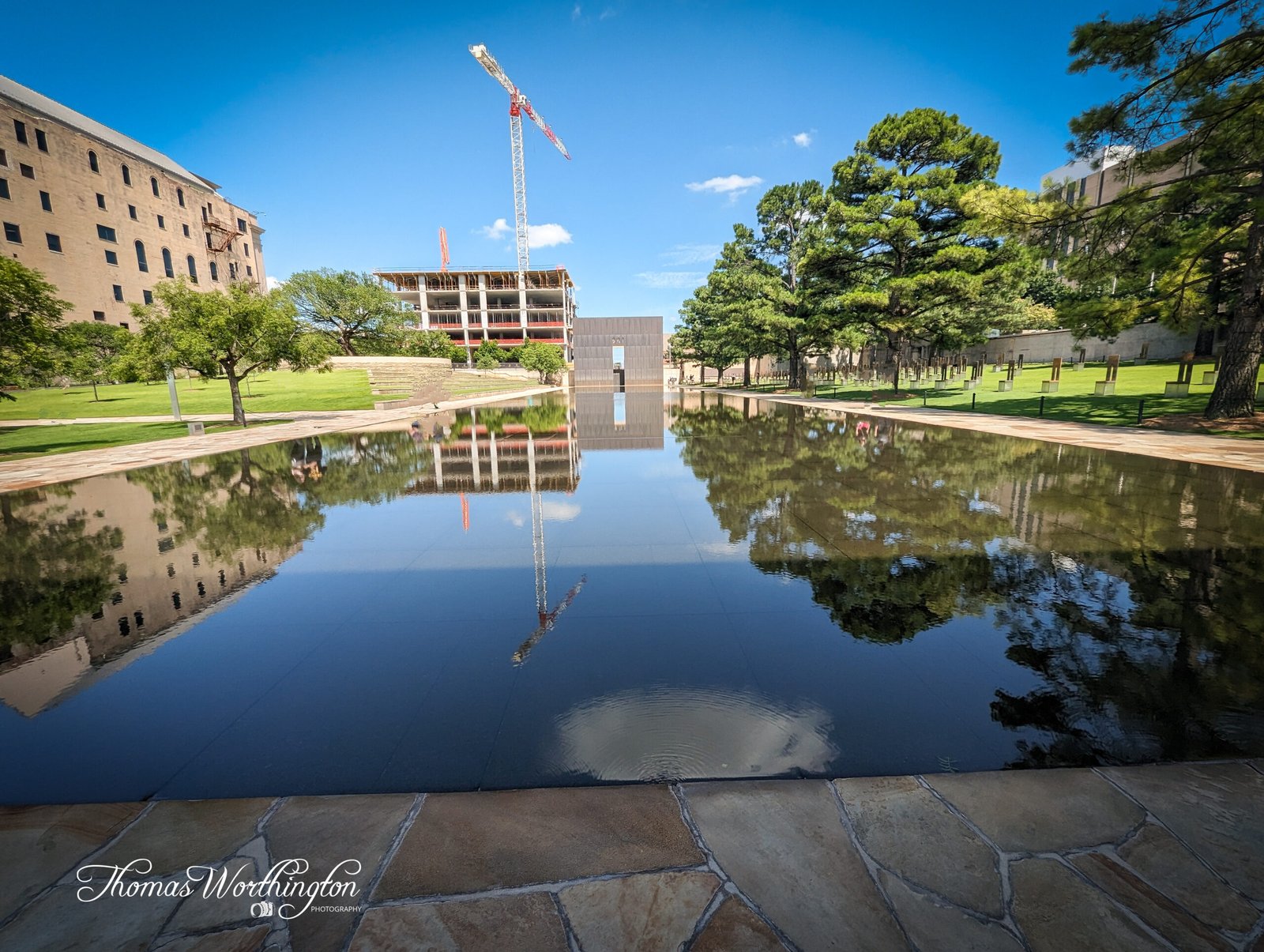
Oklahoma City Bombing Memorial
The **Oklahoma City National Memorial & Museum** stands as a solemn and powerful tribute on the former site of the Alfred P. Murrah Federal Building, honoring the victims, survivors, and rescuers of the April 19, 1995, bombing. The outdoor symbolic memorial is centered around a 318-foot reflecting pool that occupies what was once NW Fifth Street, framed by two monumental bronze "Gates of Time." The 9:01 gate represents the last moments of peace, while the 9:03 gate marks the beginning of recovery and healing. To the south of the pool, the **Field of Empty Chairs** features 168 hand-crafted bronze and glass chairs—including 19 smaller ones for the children—arranged in nine rows to reflect the floor each person was on at 9:02 a.m. Nearby, the **Survivor Tree**, an 80-year-old American elm that miraculously withstood the blast, serves as a living symbol of resilience. This sacred space, along with the museum housed in the historic Journal Record Building, ensures that the story of tragedy is forever met with a message of hope and community strength.
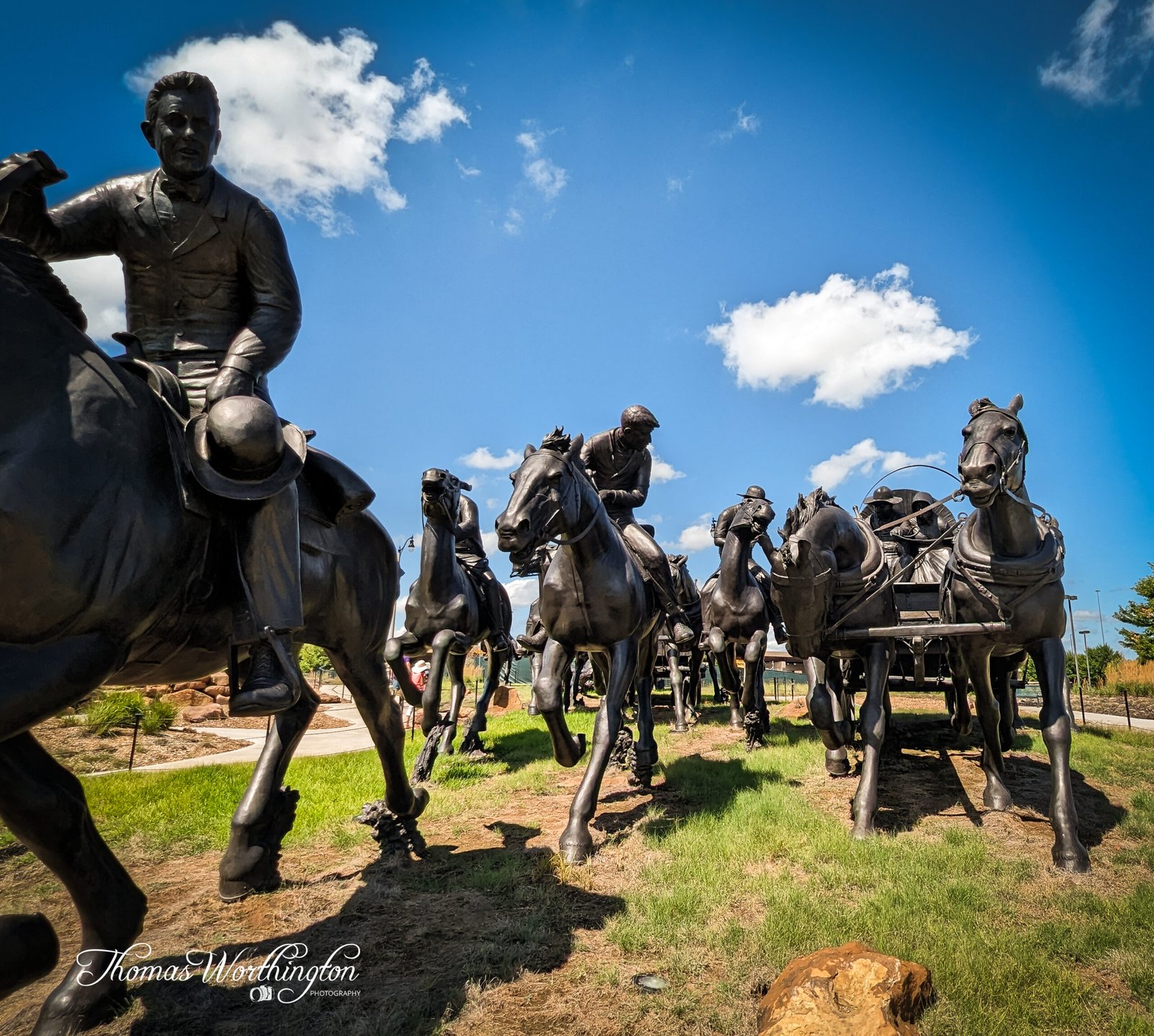
Centennial Land Run Monument
Located in the Bricktown District of Oklahoma City, the Centennial Land Run Monument is one of the world’s largest bronze sculpture series, vividly capturing the frantic energy of the 1889 Land Run. Created by artist Paul Moore, the installation spans a full 365 feet and features 45 heroic-sized figures, including pioneers on horseback, covered wagons, and even a panicked dog. The sculptures are frozen in mid-motion, splashing through the water and racing across the landscape to claim their piece of the Unassigned Lands. This massive artistic undertaking serves as a powerful, larger-than-life tribute to the grit and determination of the settlers who participated in the opening of the Oklahoma Territory, offering visitors an immersive way to walk through a pivotal moment in American history.
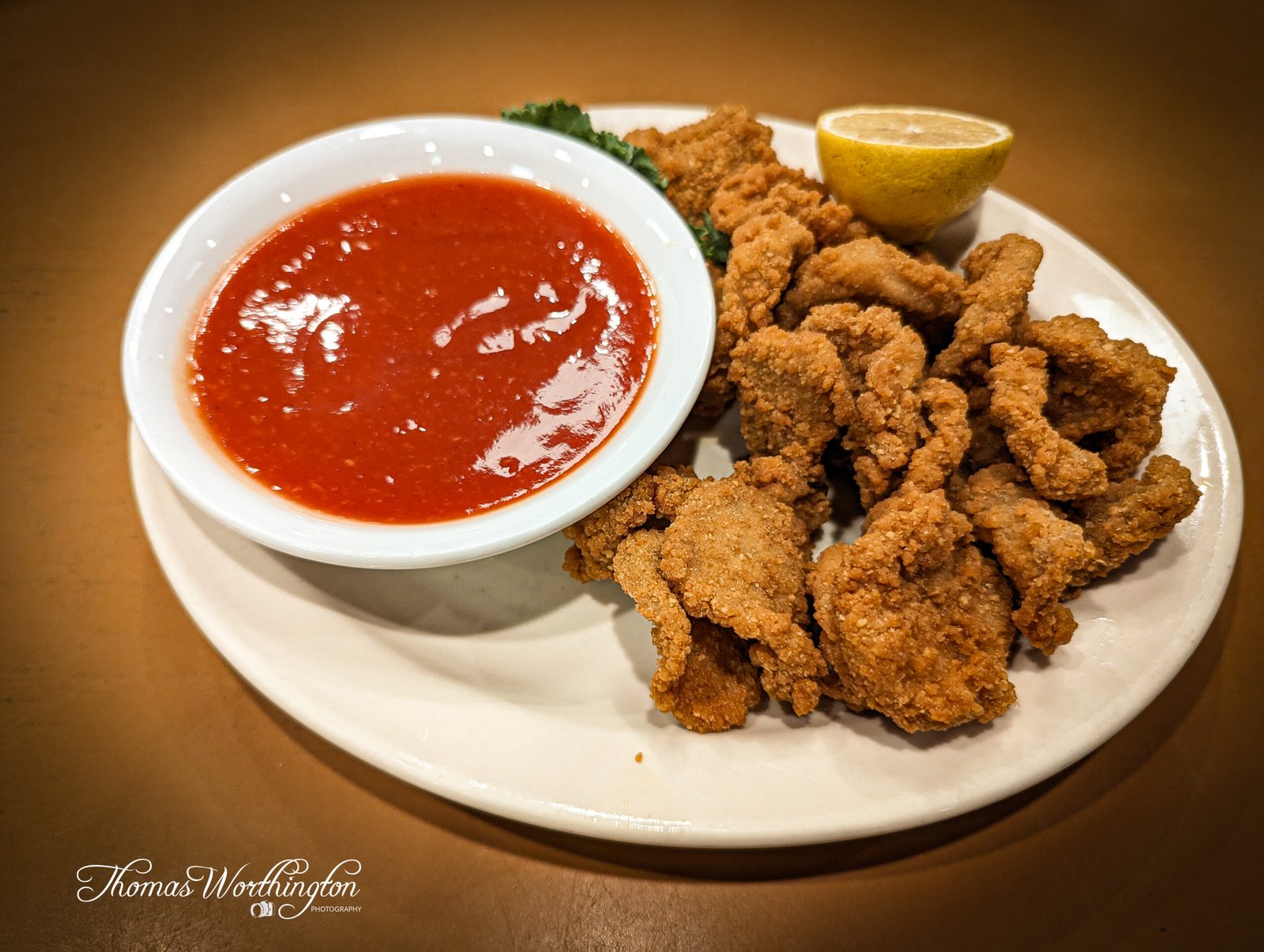
Oklahoma Stock Yards
Established in 1910, Stockyards City in Oklahoma City is the world's largest stocker and feeder cattle market and serves as a living monument to the region's ranching heritage. The district is a time capsule of Western culture, where the air often carries the scent of livestock and the streets are lined with historic brick buildings and legendary outfitters. At the heart of this district sits Cattlemen’s Steakhouse, the oldest continuously operating restaurant in Oklahoma, famous for winning its ownership in a high-stakes dice game in 1945. A quintessential part of the dining experience here is the lambfries—a regional delicacy consisting of sliced, breaded, and deep-fried sheep testicles. Served with a side of cocktail sauce, these "cowboy oysters" are a celebrated tradition for locals and adventurous travelers alike, offering a unique and savory taste of the authentic Great Plains culinary scene.
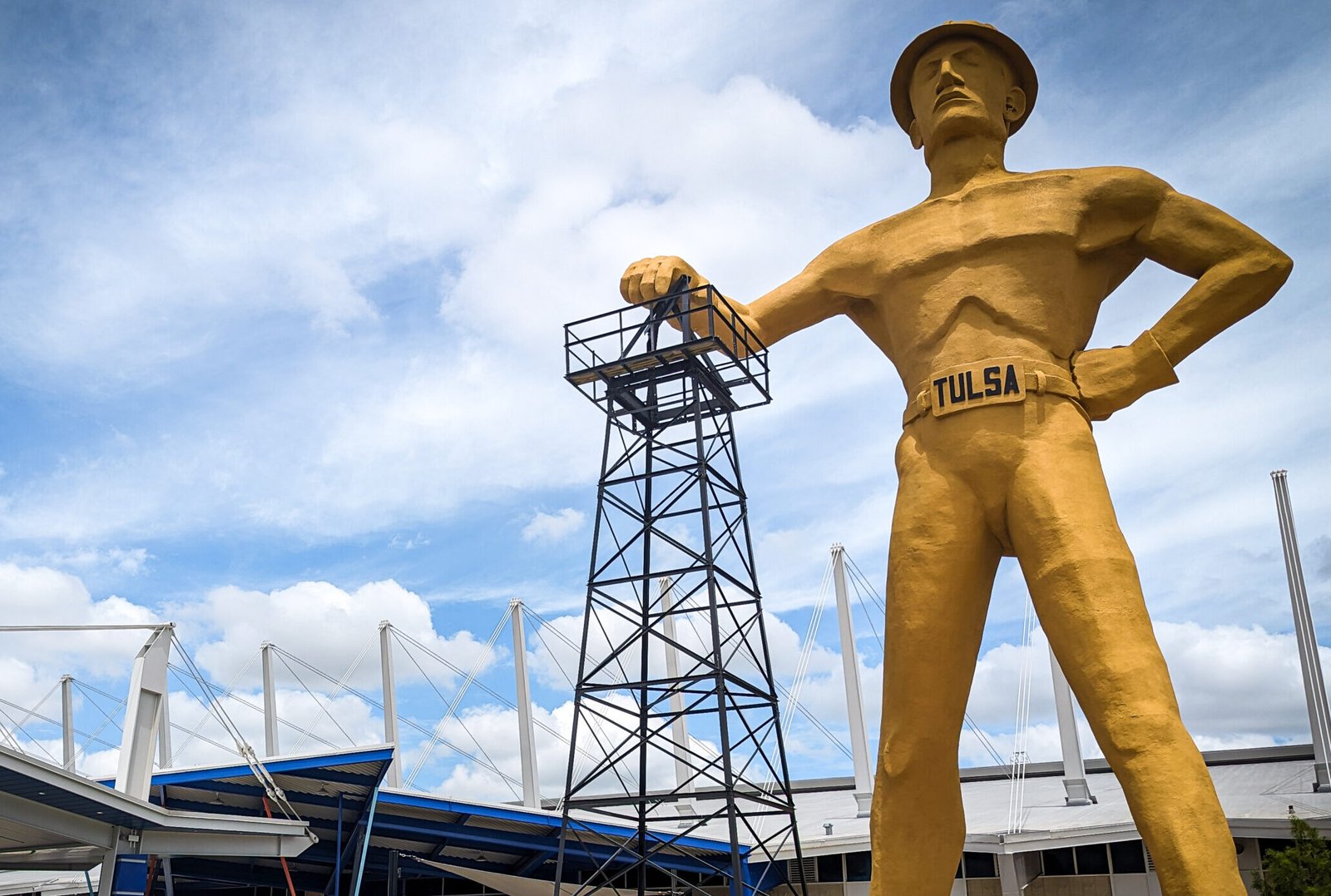
The Golden Driller
Standing 76 feet tall at the Tulsa Expo Square, the Golden Driller is a colossal tribute to Oklahoma's history as a world leader in the oil industry. Originally created for the 1953 International Petroleum Exposition, the 43,500-pound statue was permanently installed in 1966 and officially designated as the state monument in 1979. The massive roughneck features a belt buckle emblazoned with "Tulsa" and rests his right hand on a genuine steel oil derrick that was relocated from a depleted field in Seminole, Oklahoma. Built to withstand 200 mph winds, this iconic roadside landmark remains one of the tallest freestanding statues in the United States, serving as a must-see detour for travelers navigating the Oklahoma stretch of Route 66.
Texas
Total Miles Traveled 186
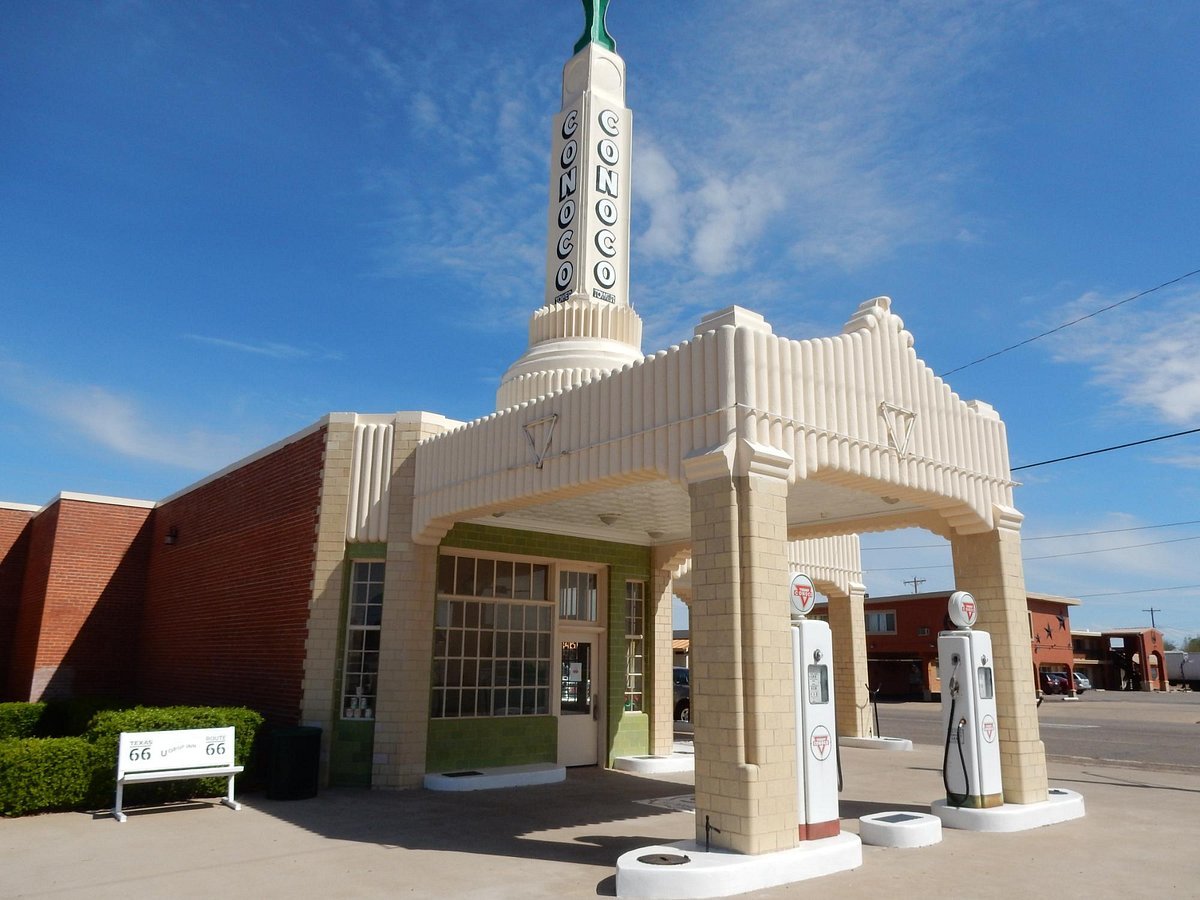
U-Drop Inn (Shamrock)
This 1936 Art Deco masterpiece is one of the most beautiful buildings on the route, featuring distinct green neon and a "confectionery" tower. Fans of the movie Cars will immediately recognize it as the inspiration for Ramone’s House of Body Art. Now serving as a visitor center and museum, the U-Drop Inn has been restored to its former glory, glowing brilliantly against the Texas panhandle sky.
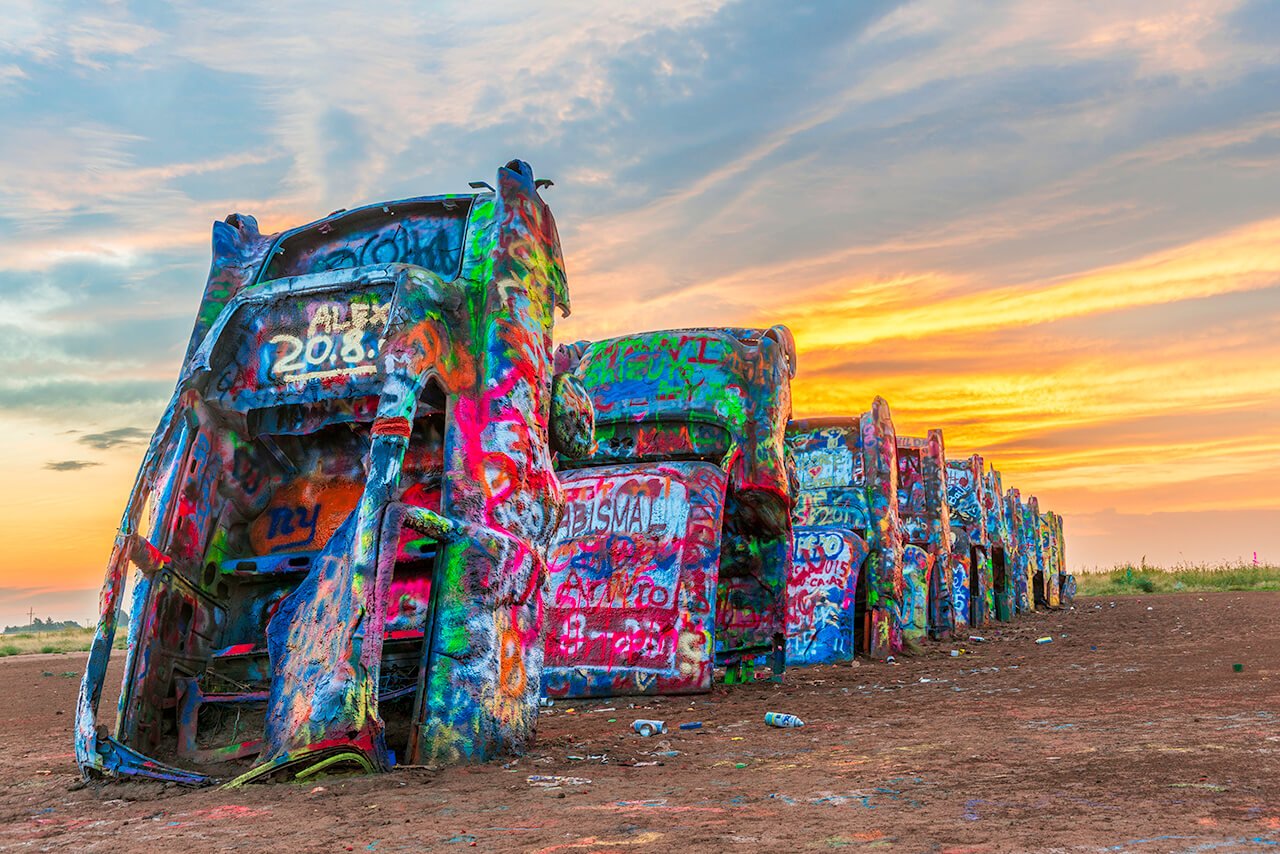
Cadillac Ranch (Amarillo)Cadillac Ranch (Amarillo)
Created in 1974 by the art group Ant Farm, Cadillac Ranch features ten Cadillacs buried nose-first in the dirt at the same angle as the Great Pyramid of Giza. Unlike most art installations, visitors are encouraged to bring spray paint and leave their mark. The cars are now covered in inches of colorful, layered paint, creating a constantly evolving monument to the freedom of the road.
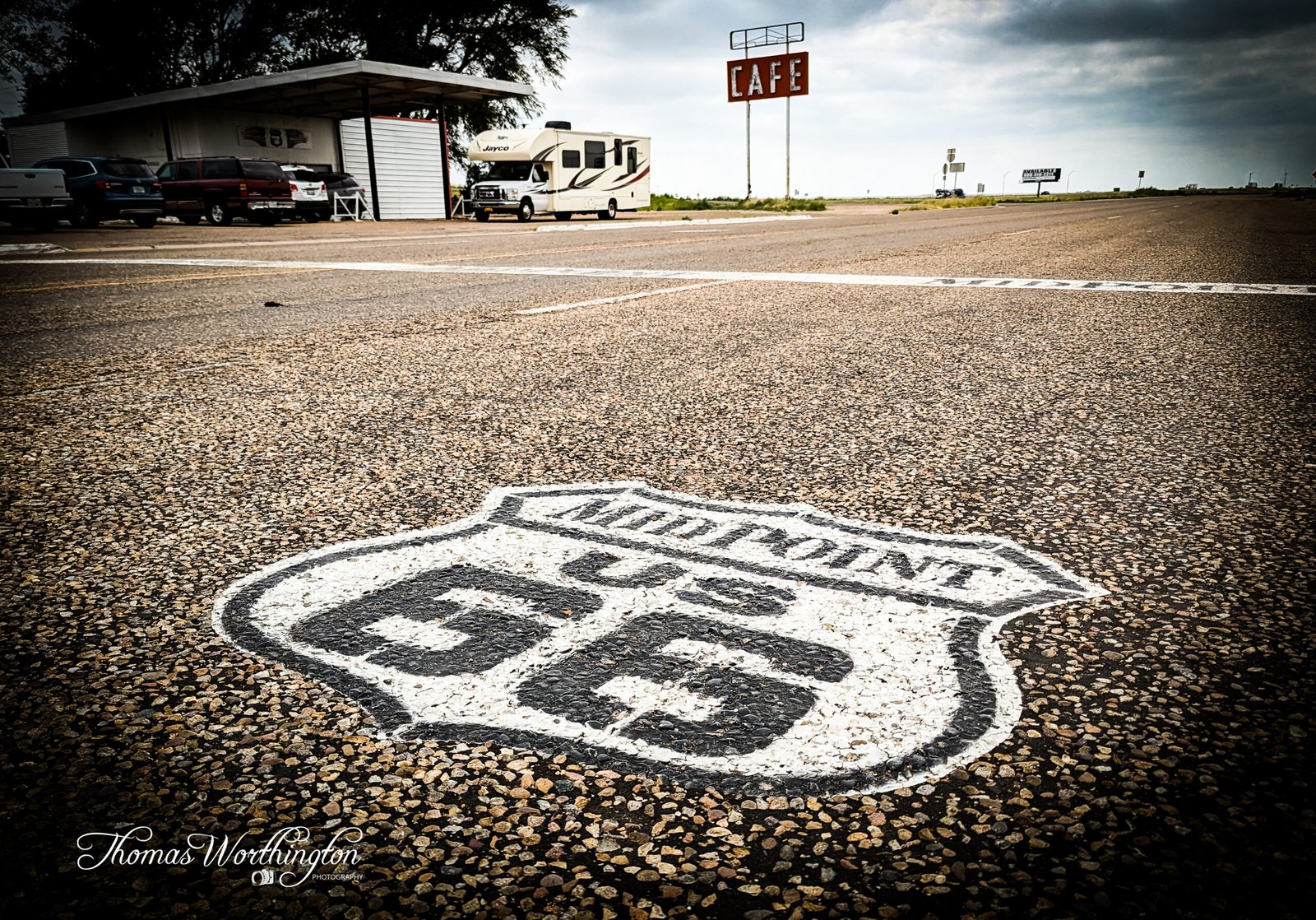
Midpoint Café (Adrian)
As the name suggests, the Midpoint Café marks the exact geographical center of Route 66—1,139 miles from both Chicago and Los Angeles. Famous for its "ugly crust" pies, the café has been a refueling station for hungry drivers since the heyday of the road. It remains a celebratory milestone where travelers stop to breathe a sigh of relief, knowing they’ve made it halfway across the country.
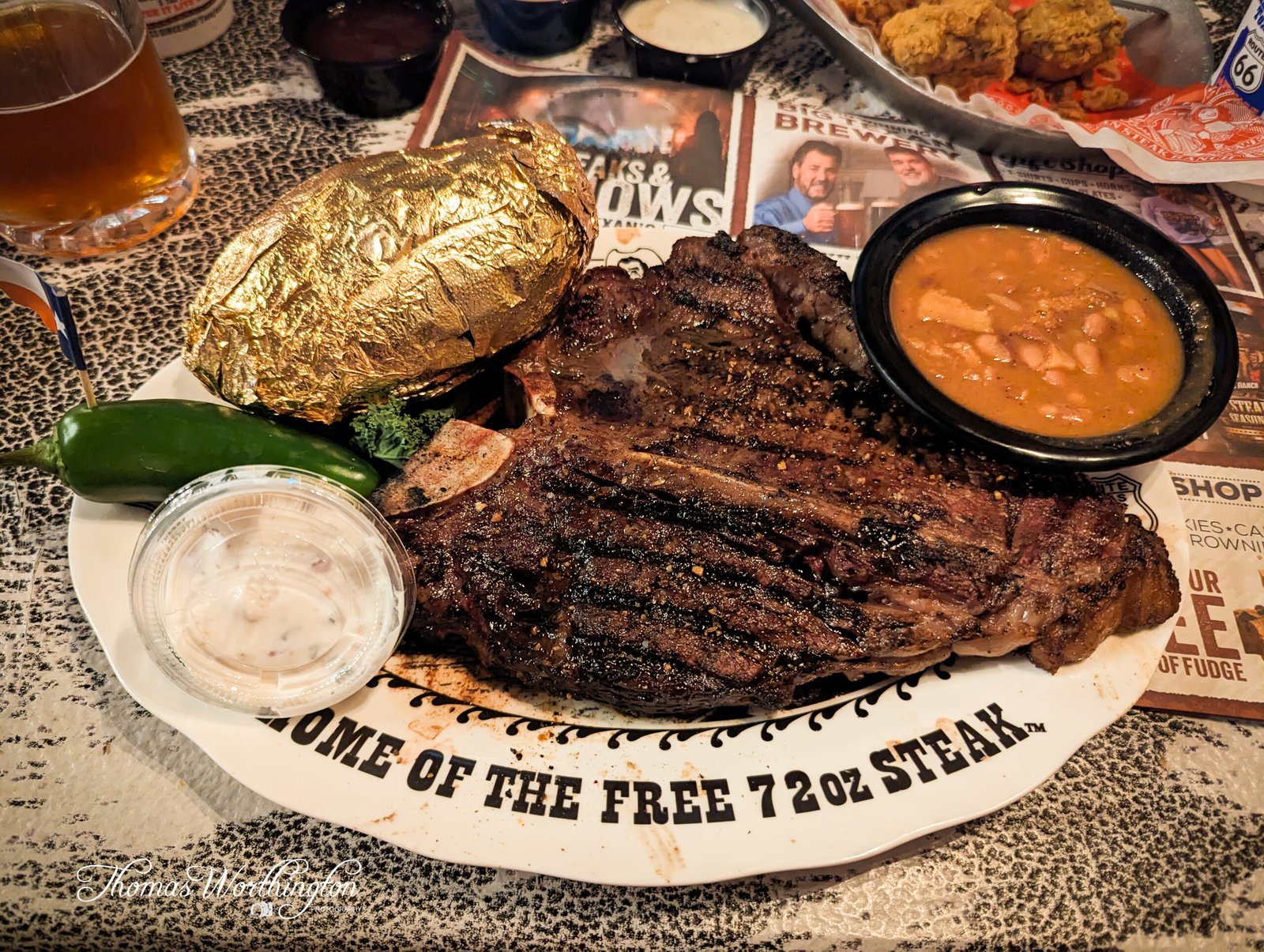
The Big Texan Steak Ranch (Amarillo)
The Big Texan Steak Ranch in Amarillo is the ultimate temple of Texas-sized excess and a cornerstone of the Route 66 experience. Famous for its 72-ounce steak challenge, the restaurant feels like a cross between an Old West saloon and a high-stakes arena, where brave diners take to a raised stage to battle four-and-a-half pounds of top sirloin under the glow of digital timers. The interior is a sensory overload of wagon-wheel chandeliers and taxidermy, creating a rowdy, communal atmosphere that captures the spirit of the Mother Road. No visit is truly authentic without an order of the Rocky Mountain Oysters; these hand-breaded "cowboy favorites" are deep-fried to a perfect golden-brown and served with a tangy "buck-a-roo" cocktail sauce. While they are often the punchline of a joke for first-timers, they are surprisingly tender and savory, offering a rich, adventurous appetizer that perfectly complements a night of unapologetic Texan indulgence.
New Mexico
Total Miles Traveled 487
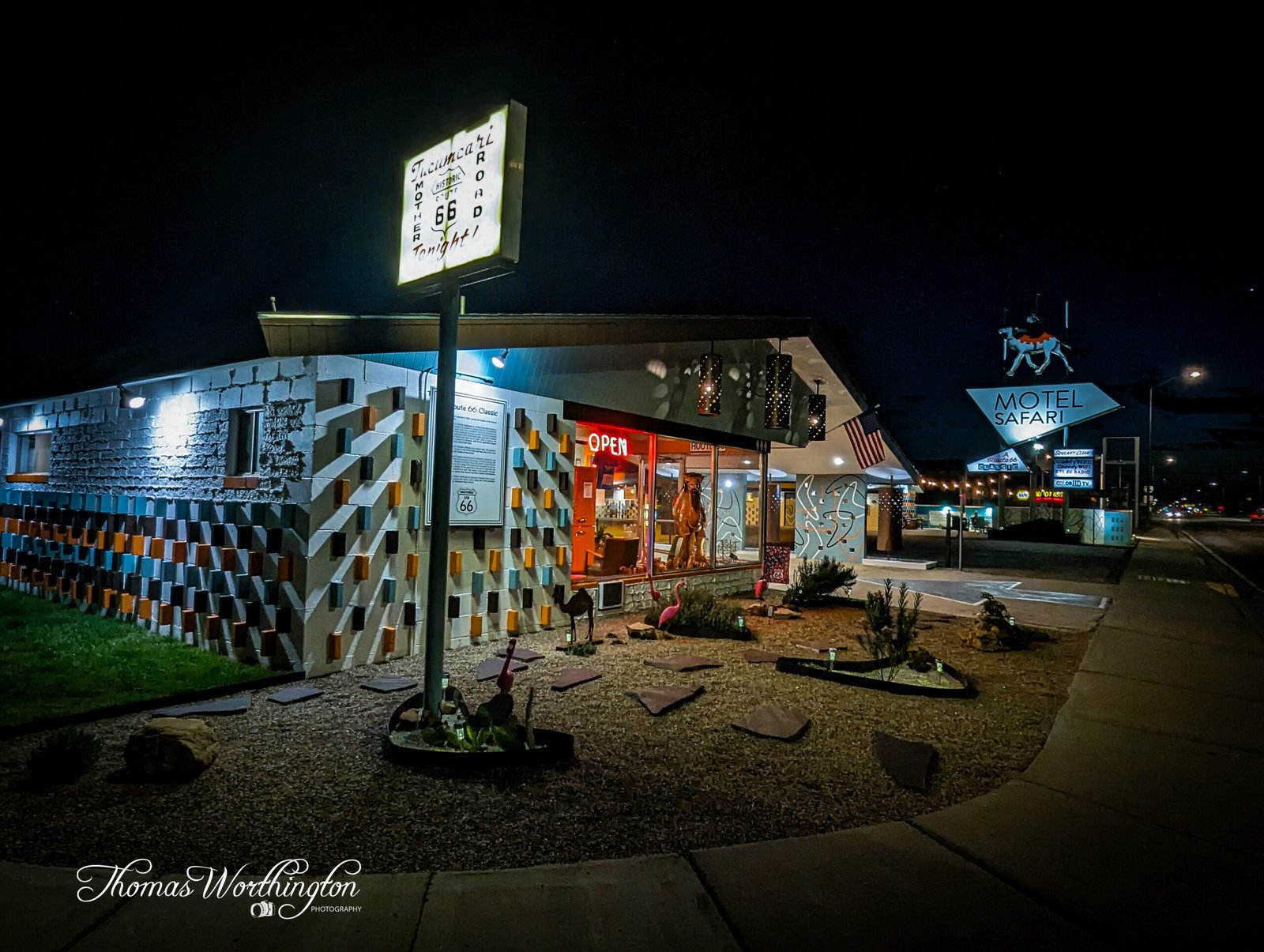
Motels Safari of Tucumcari
Tucumcari was once famous for the slogan "Tucumcari Tonight!" and its dozens of neon-lit motels. While many have faded, icons like the Motel Safari, which Built in 1959, it is a stunning example of "Googie" architecture in Tucumcari, characterized by its quirky geometric sign and mid-century modern aesthetic. The property is famous for its iconic camel mascot, Clyde, and features meticulously restored rooms furnished with custom pieces from the motel's original construction. Staying here today is like stepping back into a 1950s postcard, as the town maintains its reputation as the best place to see the Mother Road’s neon glow.
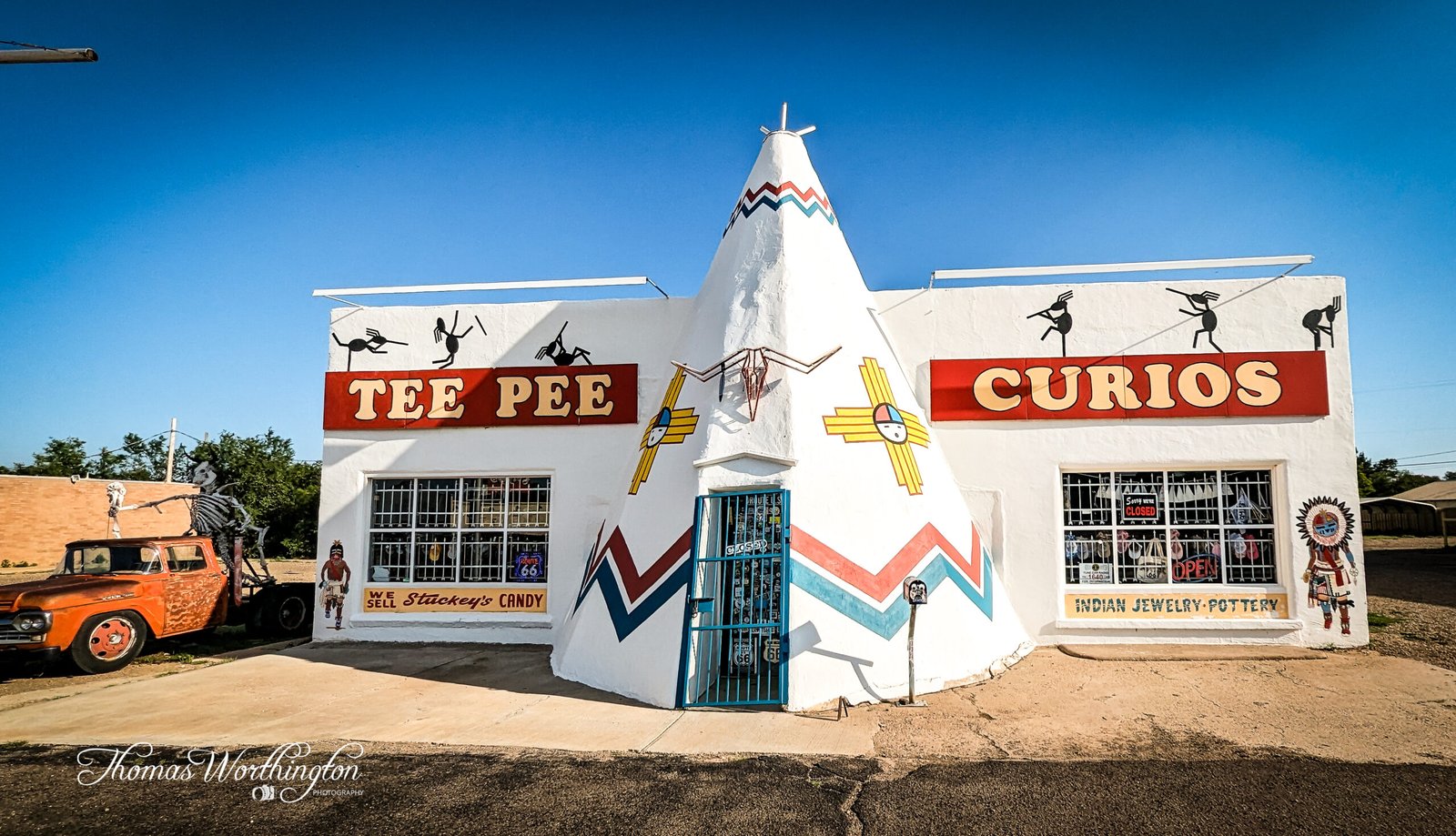
Tee Pee Curios (Tucumcari)
Originally a gas station built in the 1940s, Tee Pee Curios later added its iconic concrete teepee entrance to attract souvenir hunters. While it no longer pumps gas, it remains one of the last "original" curio shops on the route. It’s the perfect place to pick up a Route 66 shield or some turquoise jewelry, keeping the tradition of the roadside gift shop alive and well.
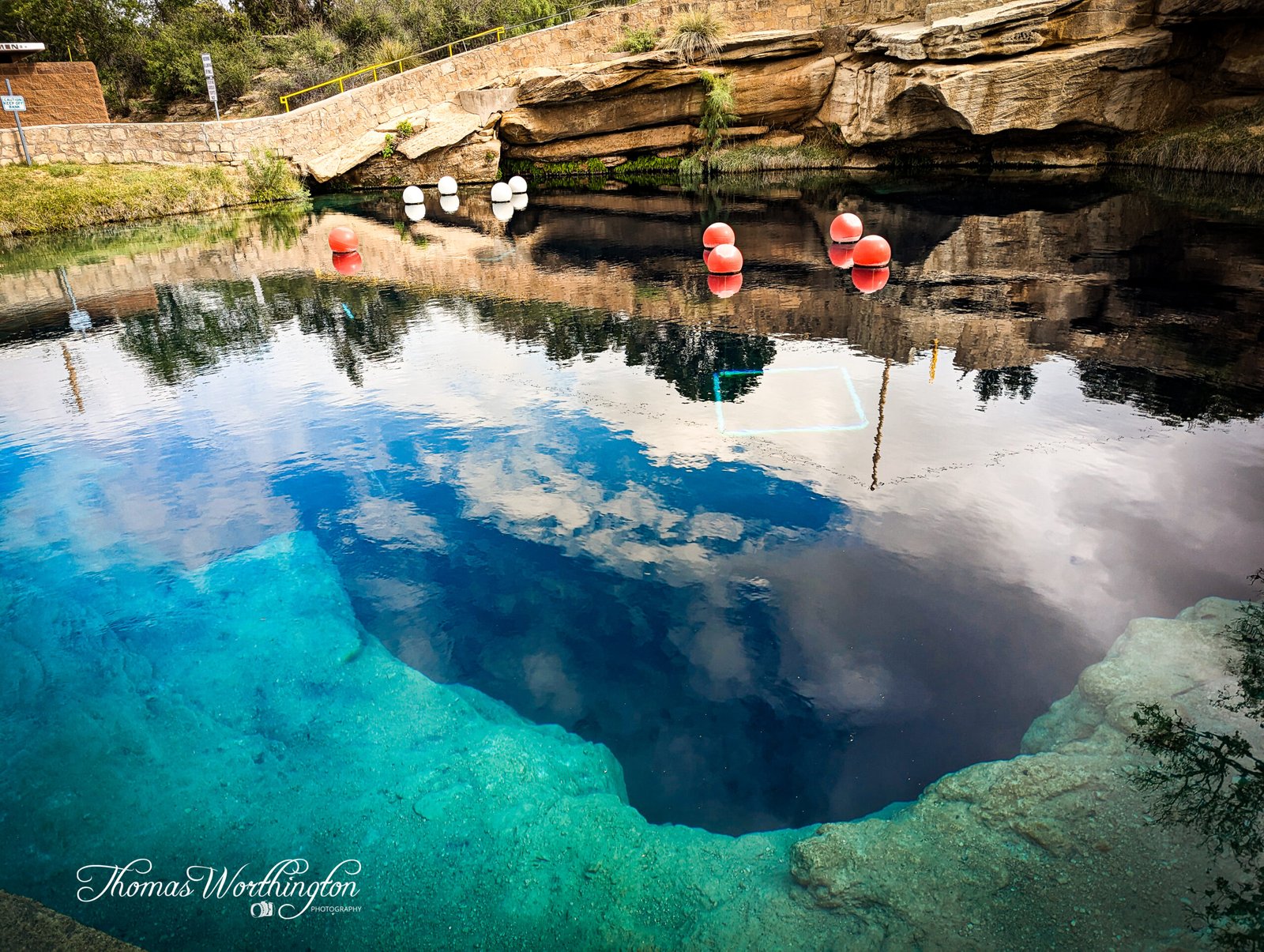
The Blue Hole
Located in Santa Rosa, New Mexico, the Blue Hole is a breathtaking natural wonder and a legendary oasis for travelers crossing the arid high-desert landscape of Route 66. This bell-shaped artesian spring is world-renowned for its sapphire-blue clarity and a constant, refreshing temperature of 62°F, which remains stable regardless of the season. With a depth of roughly 80 feet and a flow rate of 3,000 gallons per minute, the pool is a premier destination for scuba divers and cliff-jumpers alike, offering an underwater visibility that often exceeds 100 feet. Once a watering hole for nomadic tribes and Spanish explorers, this "City of Lakes" centerpiece now serves as a vibrant community hub where the desert heat is met with crystal-clear waters, making it one of the most unique and iconic swimming holes in the American Southwest.
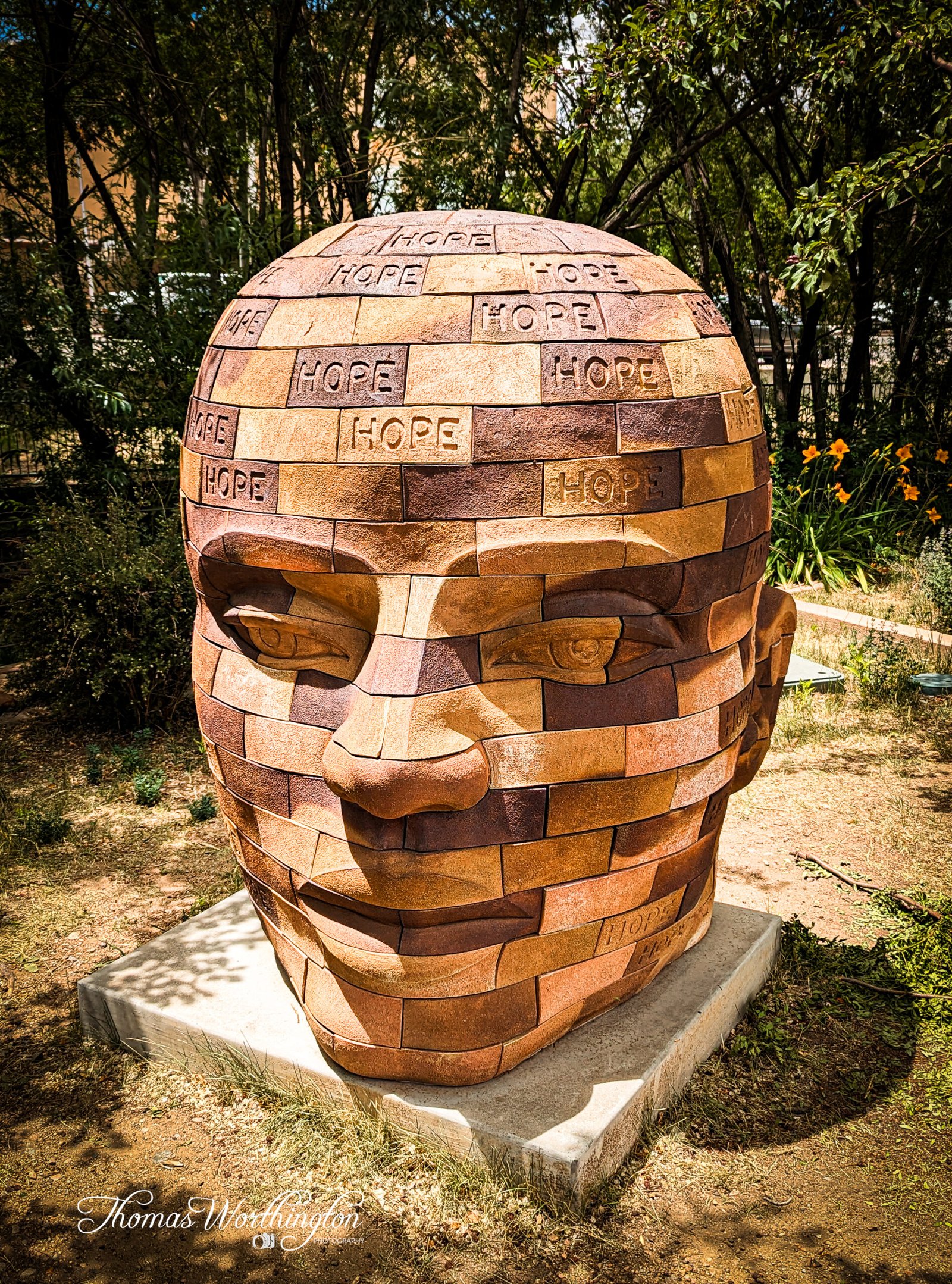
Santa Fe
Santa Fe, New Mexico, known as "The City Different," is a vibrant tapestry of cultures that reflects over four centuries of history. As the oldest state capital in the United States, it serves as a stunning intersection of Native American, Spanish, and Anglo traditions. This heritage is physically etched into the landscape through its iconic Pueblo-style adobe architecture, where low-slung, earthy buildings blend seamlessly into the high-desert terrain. The city is a world-class arts destination, anchored by the historic Plaza and the galleries of Canyon Road, but its soul lies in the living traditions of the surrounding 19 Pueblos. This cultural fusion creates a unique atmosphere where ancient customs, such as the seasonal dances and the craftsmanship of turquoise jewelry, thrive alongside a contemporary, sophisticated lifestyle. The food scene in Santa Fe is a direct extension of this cultural melting pot, offering a bold and distinct culinary identity centered around the legendary New Mexico chile. Whether you are dining at a casual roadside stand or a high-end bistro, the local obsession begins with the question "Red or Green?"—a choice between the smoky, earthy notes of red chile sauce or the bright, pungent heat of green. The city’s signature dishes, such as blue corn enchiladas, smothered burritos, and savory Frito pies, showcase ingredients like piñon nuts and calabacitas (squash and corn). Beyond traditional New Mexican fare, Santa Fe boasts an innovative gastronomic landscape featuring James Beard Award-winning chefs who elevate local staples into fine-dining experiences, ensuring that every meal is as rich and layered as the city’s history.
Arizona
Total Miles Traveled 401
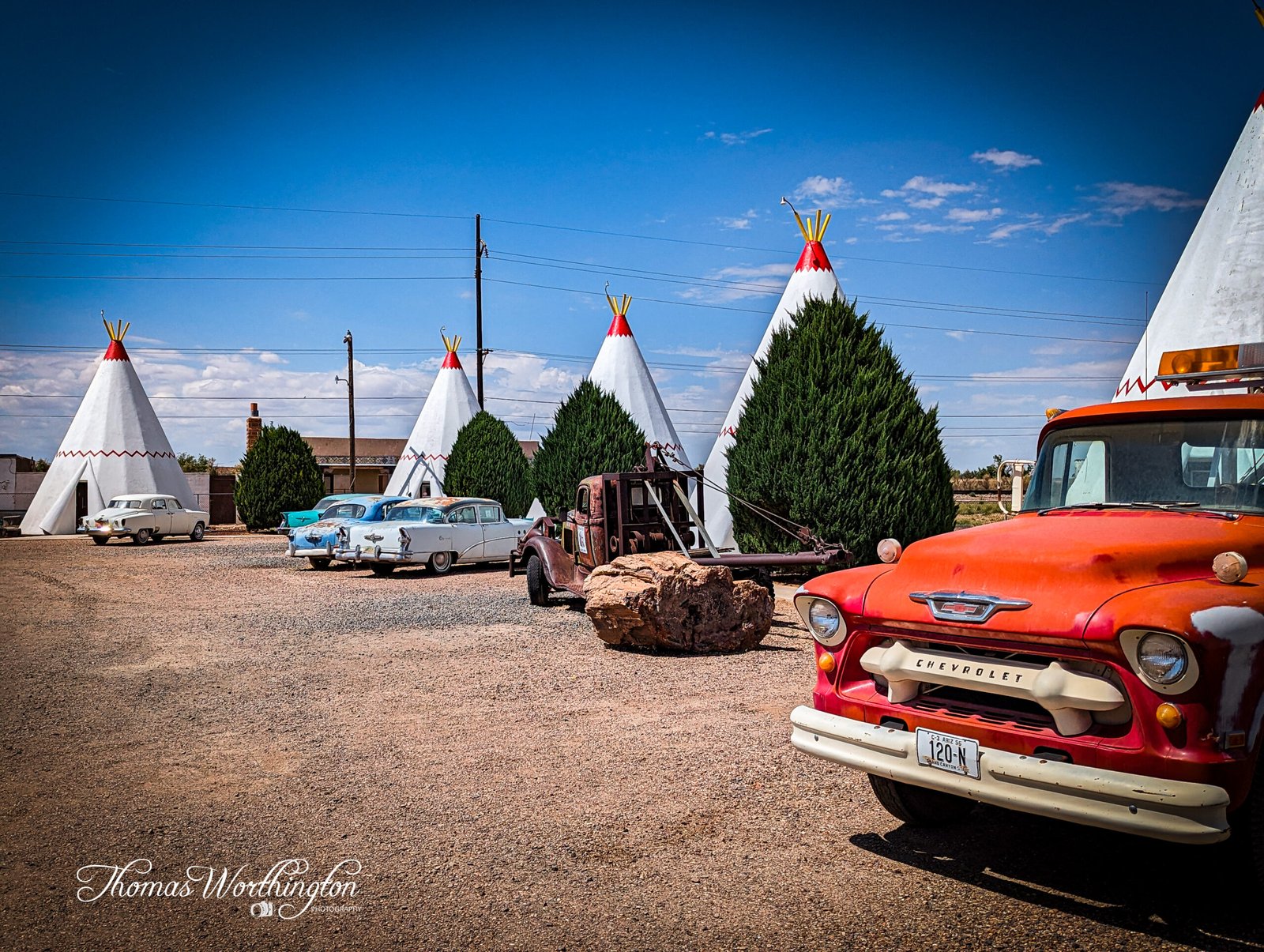
Wigwam Motel (Holbrook)Wigwam Motel (Holbrook)
"Have you slept in a Wigwam lately?" This question has greeted travelers since 1950. The Wigwam Motel consists of fifteen concrete tipis arranged in a village, complete with vintage cars parked outside to complete the illusion. One of only two such motels remaining on the route, it offers a quirky, immersive stay that remains remarkably popular with international tourists seeking the "authentic" 66 experience.
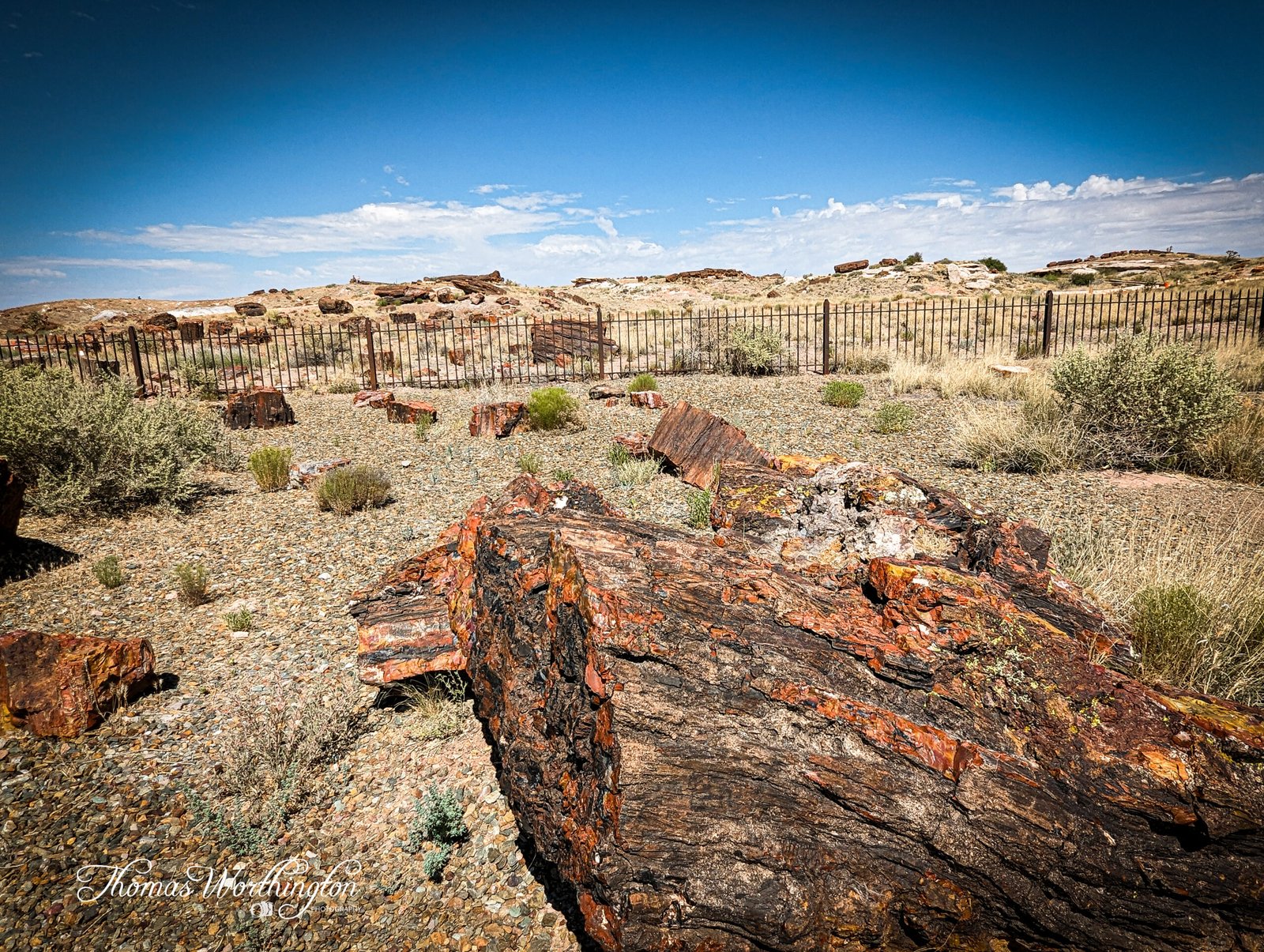
Petrified Forest & Painted Desert
The route cuts directly through this national park, which features 225-million-year-old fossilized logs and vibrant, multi-hued badlands. Travelers in the 1930s often stopped here to buy "petrified wood" souvenirs; today, the park is a protected landscape that preserves a pristine section of the original 1932 alignment of Route 66, marked by a line of weathered telephone poles.
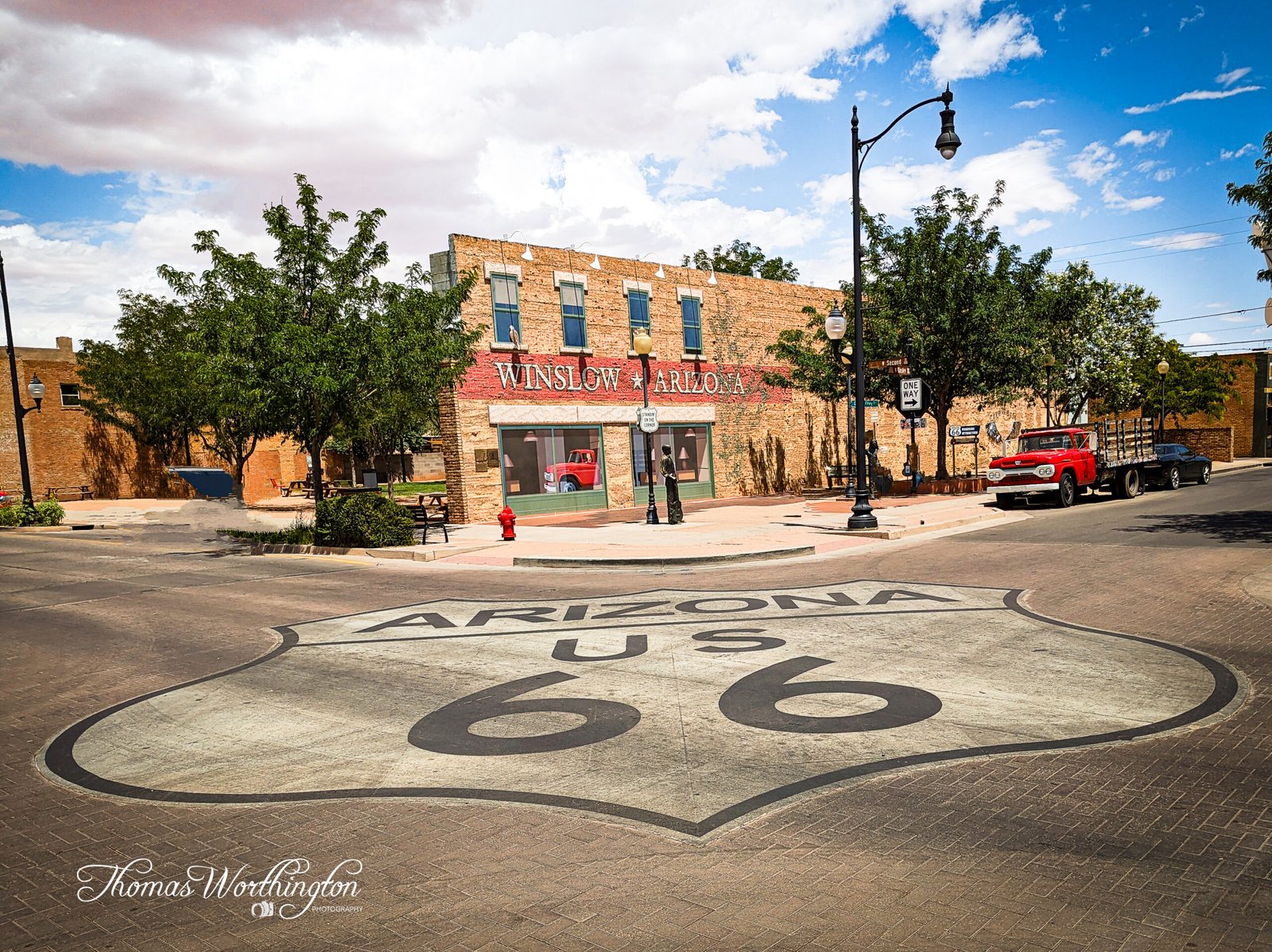
Standin' on the Corner Park (Winslow)
Immortalized by the Eagles' hit "Take It Easy," this park features a bronze statue and a large mural depicting a "girl in a flatbed Ford." Before the park was built in 1999, Winslow was a quiet town bypassed by the Interstate; today, it is a bustling hub where music fans congregate to take the world’s most famous song-inspired selfie. You will find that flat bed Ford, but you will have to supply the Girl. The Jackrabbit Trading Post Located just west of Joseph City, Arizona, is a quintessential Route 66 landmark that has been "hoppin'" since 1949. Originally a snake farm before being transformed by James Taylor, the post became famous for a massive marketing campaign involving yellow mileage signs that stretched for hundreds of miles, building anticipation for the final, iconic "HERE IT IS" billboard. Today, the family-owned shop is run by Tony and Cindy Jaquez, who maintain the vintage charm of the property, including the legendary fiberglass jackrabbit that visitors can sit on for photos. Inside, travelers can find a treasure trove of Mother Road memorabilia, including custom-made mileage signs and their signature cherry cider, making it an essential stop for anyone looking to experience the authentic spirit of the American West.
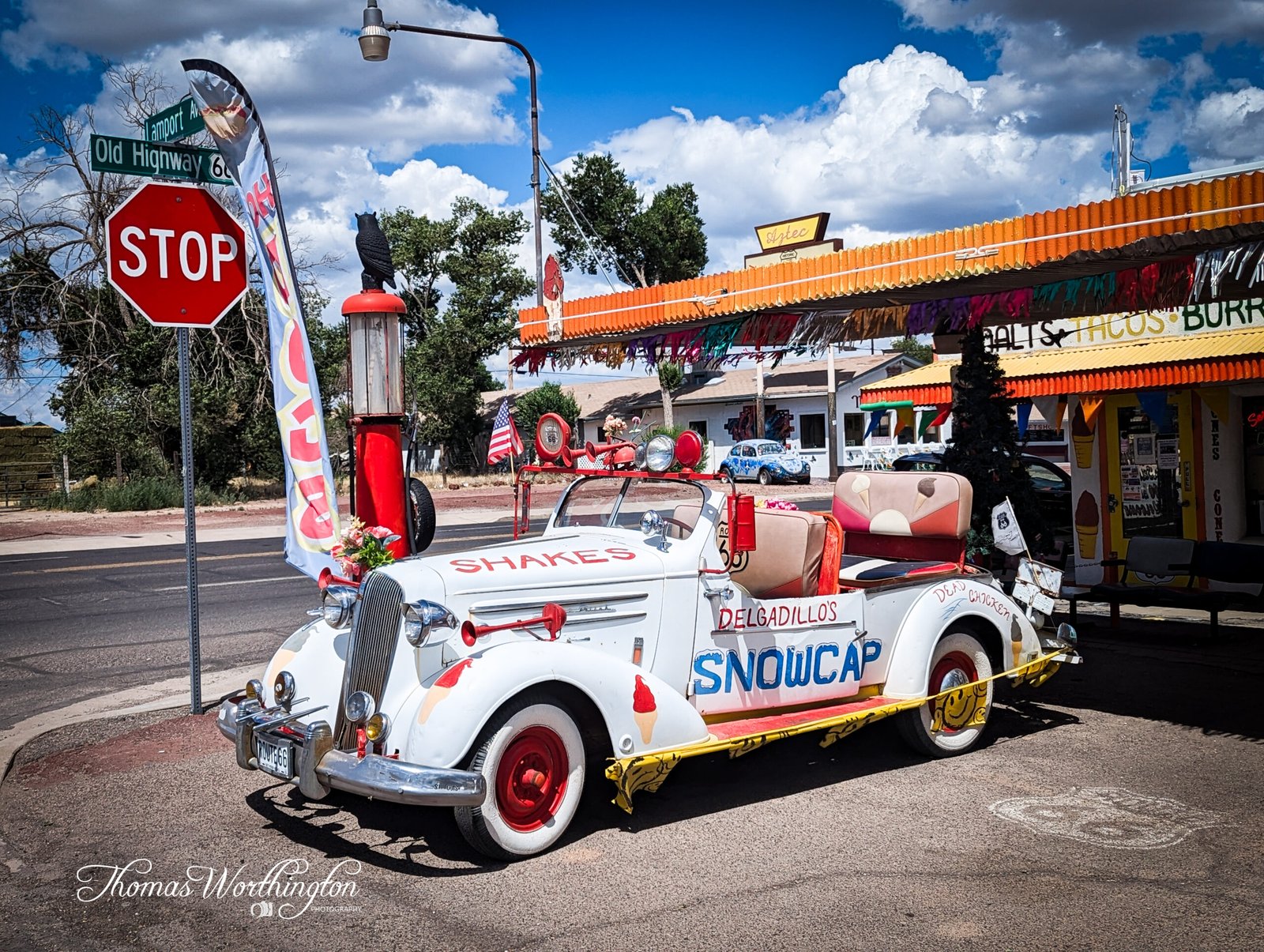
Delgadillo’s Snow Cap (Seligman)
Built in 1953 out of scrap lumber by Angel Delgadillo’s brother Juan, the Snow Cap is a monument to humor. Known for its "dead chicken" (fried chicken) and prankster service, it played a huge role in the rebirth of the route. Angel Delgadillo is often called the "Guardian Angel of Route 66," and his family still runs this wacky eatery, serving up malts and jokes in equal measure.
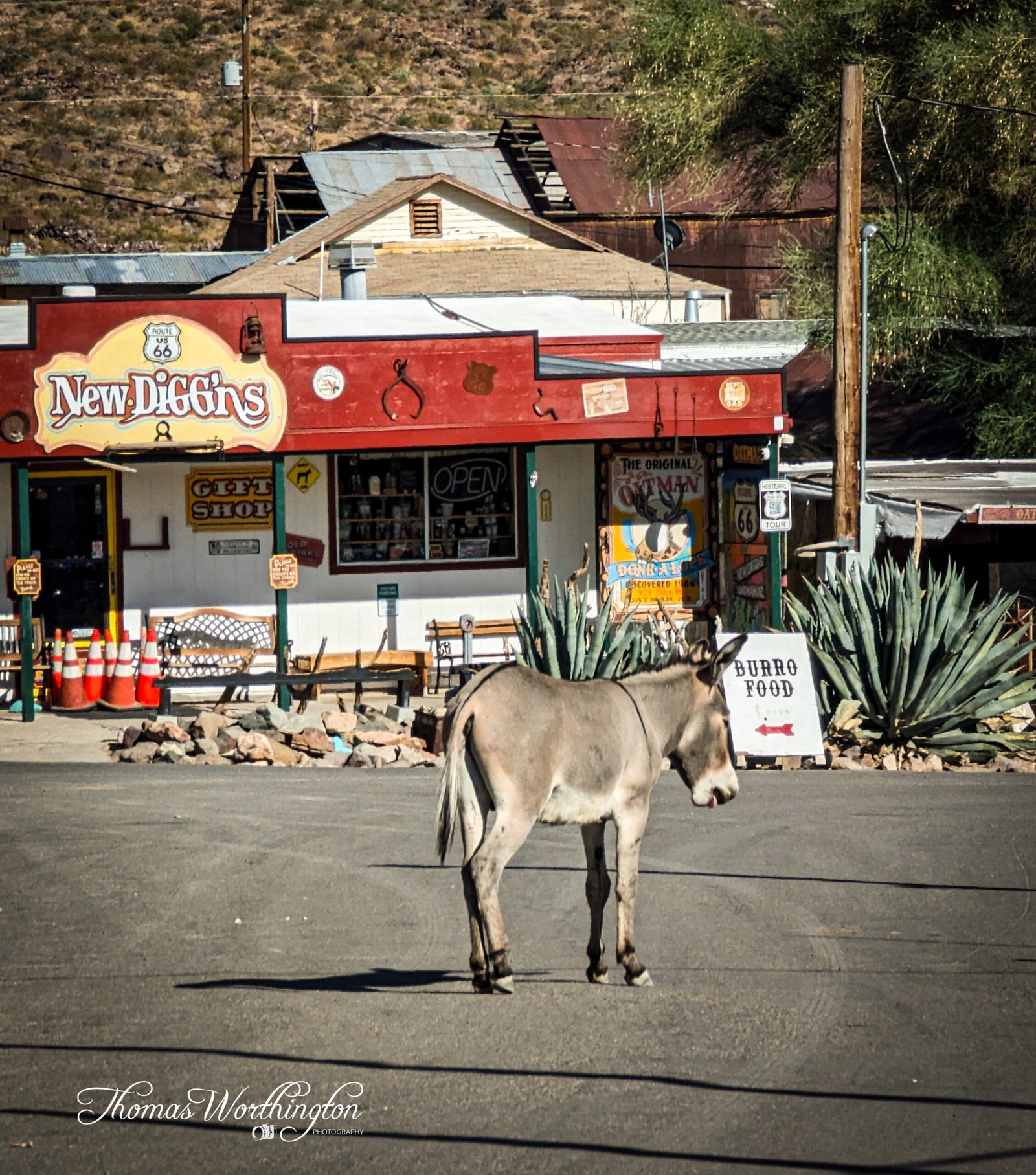
Oatman Ghost Town
Nestled in the Black Mountains, Oatman is a former gold mining town that refused to die. Its most famous residents are the "wild" burros—descendants of the pack animals used by miners—who roam the streets looking for treats. Today, the town is a lively "living ghost town" with staged gunfights and wooden sidewalks, offering a rugged look at the road’s Old West roots.
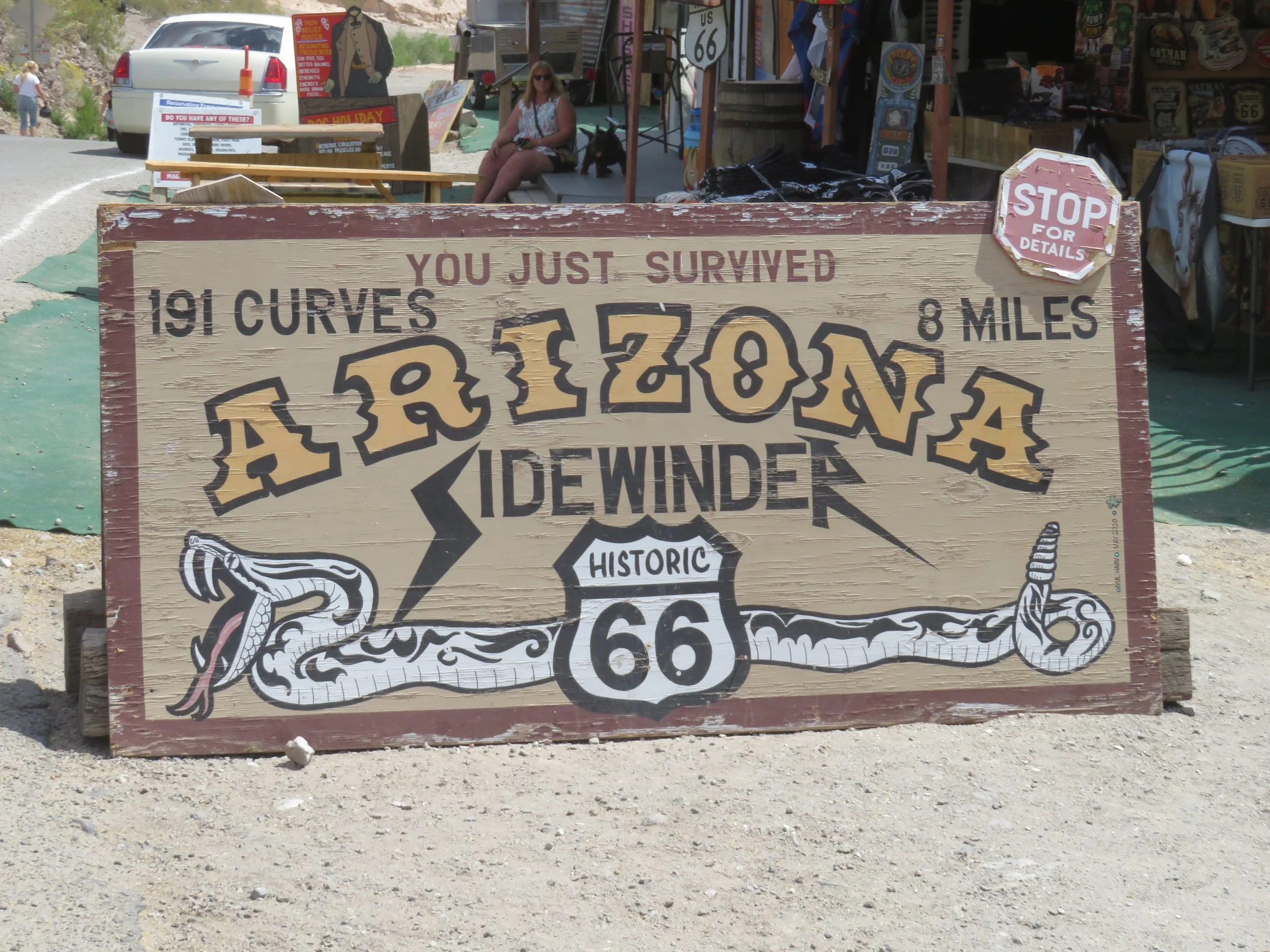
Arizona Sidewinder
Winding through the rugged Black Mountains of western Arizona, the Oatman Highway—affectionately known as the Arizona Sidewinder—is perhaps the most exhilarating and technically demanding stretch of the entire historic Route 66. This narrow, two-lane ribbon of asphalt climbs to an elevation of 3,550 feet at Sitgreaves Pass, challenging drivers with 191 hairpin curves and steep 12% grades that lack the security of modern guardrails. In the early days of the Mother Road, the road was so intimidating that many travelers hired "tow-men" to navigate their vehicles over the summit, while others famously had to drive their Model Ts in reverse to ensure fuel reached the engine. Today, the Sidewinder remains a pilgrimage for road enthusiasts, offering breathtaking panoramic views of the Mojave Desert and the Colorado River Valley, all while serving as the primary gateway to the historic mining town of Oatman and its famous residents, the wild burros.
Nevada
Total Miles Traveled 23
While Laughlin isn't an official stop on Route 66, you’re practically on its doorstep. It’s well worth a detour to explore this riverside landmark and soak in its unique place in Nevada history.
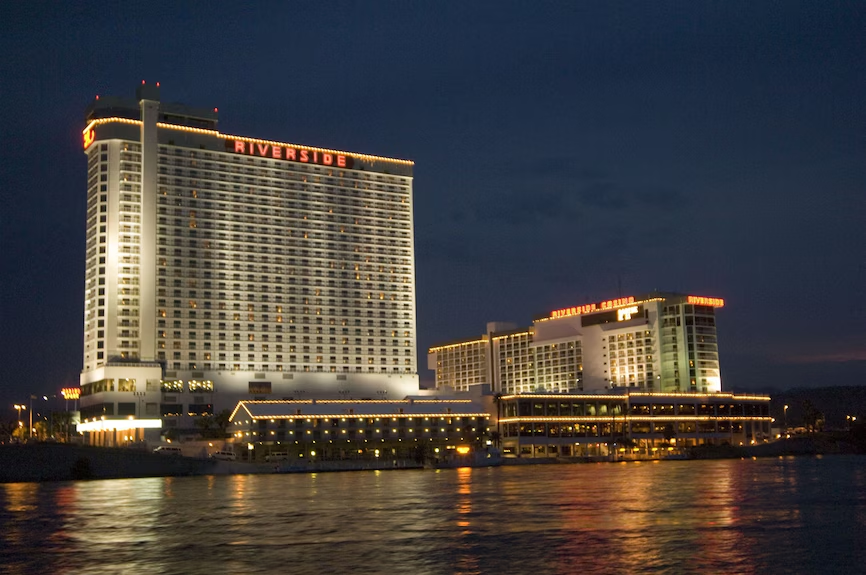
Don Laughlin's Riverside Resort Hotel & Casino
Laughlin, Nevada, is a unique riverside destination nestled on the banks of the Colorado River, directly across from Bullhead City, Arizona. Often described as a more relaxed and family-friendly alternative to Las Vegas, the town is defined by its scenic "Laughlin Strip"—a collection of towering hotel-casinos linked by the Laughlin Riverwalk. The town’s history is famously tied to its namesake, Don Laughlin, who purchased a small bankrupt motel in 1966 and transformed it into the Riverside Resort. Today, visitors can enjoy a mix of classic gaming, headliner entertainment, and the impressive Don Laughlin's Classic Car Collection, which showcases over 80 rare and vintage vehicles. The true star of the city is the Colorado River itself, which serves as a massive outdoor playground for water enthusiasts. Whether you are taking a leisurely ride on a Water Taxi to move between resorts or embarking on a Jet Boat Tour down to the London Bridge in Lake Havasu, the water is central to the experience. For those who prefer to stay on land, the Colorado River Heritage Greenway Park and Trails offers miles of paved paths for hiking and cycling, while the nearby Big Bend of the Colorado State Recreation Area provides sandy beaches and calm inlets perfect for a desert picnic. Beyond the bright lights and river activities, Laughlin serves as a gateway to the rugged history of the Mojave Desert. A short drive north takes you to the Laughlin Labyrinths, a series of stone mazes etched into the desert floor, or the ancient petroglyphs found in Grapevine Canyon. Its proximity to the Arizona border also makes it an ideal home Laughlin, Nevada, is a distinctive desert oasis that serves as a more relaxed, river-oriented alternative to the high-energy spectacle of Las Vegas. The town's identity is inextricably linked to its founder and namesake, Don Laughlin, who in 1964 purchased a modest, bankrupt motel on the banks of the Colorado River. His visionary spirit transformed the area from a remote stretch of desert into a premier gaming and recreation destination. Today, the town is famous for its vibrant "Strip" of hotel-casinos, the scenic Laughlin Riverwalk, and an abundance of water-based activities like jet-skiing and river cruises, all framed by the dramatic mountain backdrop of the Mojave Desert. At the heart of this transformation is Don Laughlin's Riverside Resort Hotel & Casino, the community’s inaugural property which opened its doors on August 2, 1966. What began with just 12 slot machines and all-you-can-eat chicken dinners for 98 cents has evolved into a massive 1,352-room resort that remains family-owned and operated. The property is a hub of classic Laughlin charm, featuring two distinct swimming pools, a 34-lane bowling center, and a six-screen cinema. One of its most celebrated features is Don Laughlin's Classic Car Collection, which houses over 80 rare and vintage vehicles—an impressive display that reflects the founder’s personal passion for automotive history. Don Laughlin’s legacy extends far beyond the walls of his resort; he was a true civic pioneer who personally funded the $3.5 million construction of the Laughlin Bridge to connect Nevada and Arizona, and he donated the land for the nearby international airport. Even after his passing in 2023 at age 92, the Riverside continues to embody his philosophy of providing affordable, family-friendly entertainment. Whether you’re catching a narrated cruise on the U.S.S. Riverside or exploring the high-stakes action of the casino floor, the resort stands as a living tribute to the man who quite literally put this town on the map.
California
Total Miles Traveled 314
The final leg of Route 66 through California is a dramatic journey of contrast, transitioning from the sun-scorched silence of the Mojave Desert to the sparkling shores of the Pacific. Leaving the "Gateway City" of Needles, travelers cross the vast, open expanses of the National Trails Highway, passing iconic mid-century relics like Roy’s Motel and Café in Amboy and the whimsical folk art of Elmer’s Bottle Tree Ranch. As the road climbs through the rugged Cajon Pass and descends into the bustling Inland Empire, the desert landscape gives way to the suburban sprawl of San Bernardino and Pasadena, where historic sites like the original McDonald’s and the majestic Colorado Street Bridge offer glimpses into the route's storied past. The journey culminates in a triumphant drive down Santa Monica Boulevard, finally reaching the wooden planks of the Santa Monica Pier. Here, at the "End of the Trail" sign, the 2,448-mile pilgrimage concludes with the salty breeze of the ocean, marking the completion of the ultimate American road trip.
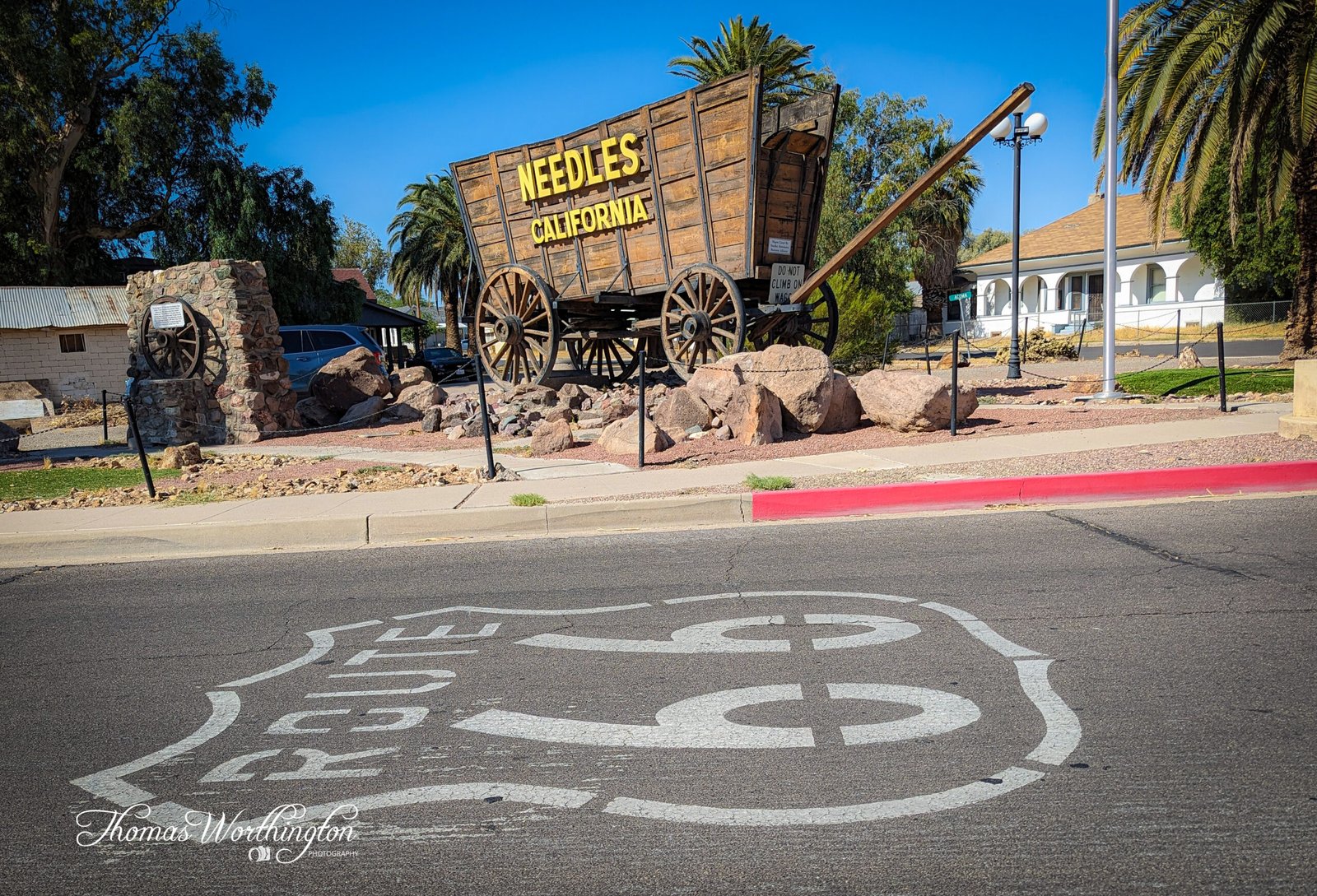
Needles
Known as the "**Gateway to California**," Needles serves as a pivotal psychological and physical milestone on Route 66, marking the first major stop for travelers crossing the Colorado River from Arizona into the Golden State. Since its founding in 1883 as a critical railroad hub for the Santa Fe Railway, the city has been a desert sanctuary, though its extreme summer heat made it one of the most grueling stretches for early motorists in unairconditioned cars. During the Dust Bowl era, Needles was the first beacon of hope for thousands of "Okies" and "Arkies" migrating west toward the promised lands of the Central Valley. Today, the town preserves its rich Mother Road heritage through landmarks like the beautifully restored **El Garces Harvey House**, the vintage neon of the **Wagon Wheel Restaurant**, and the **Needles Regional Museum**, all while maintaining its status as the last major service point before the long, desolate journey westward across the Mojave Desert toward Barstow.
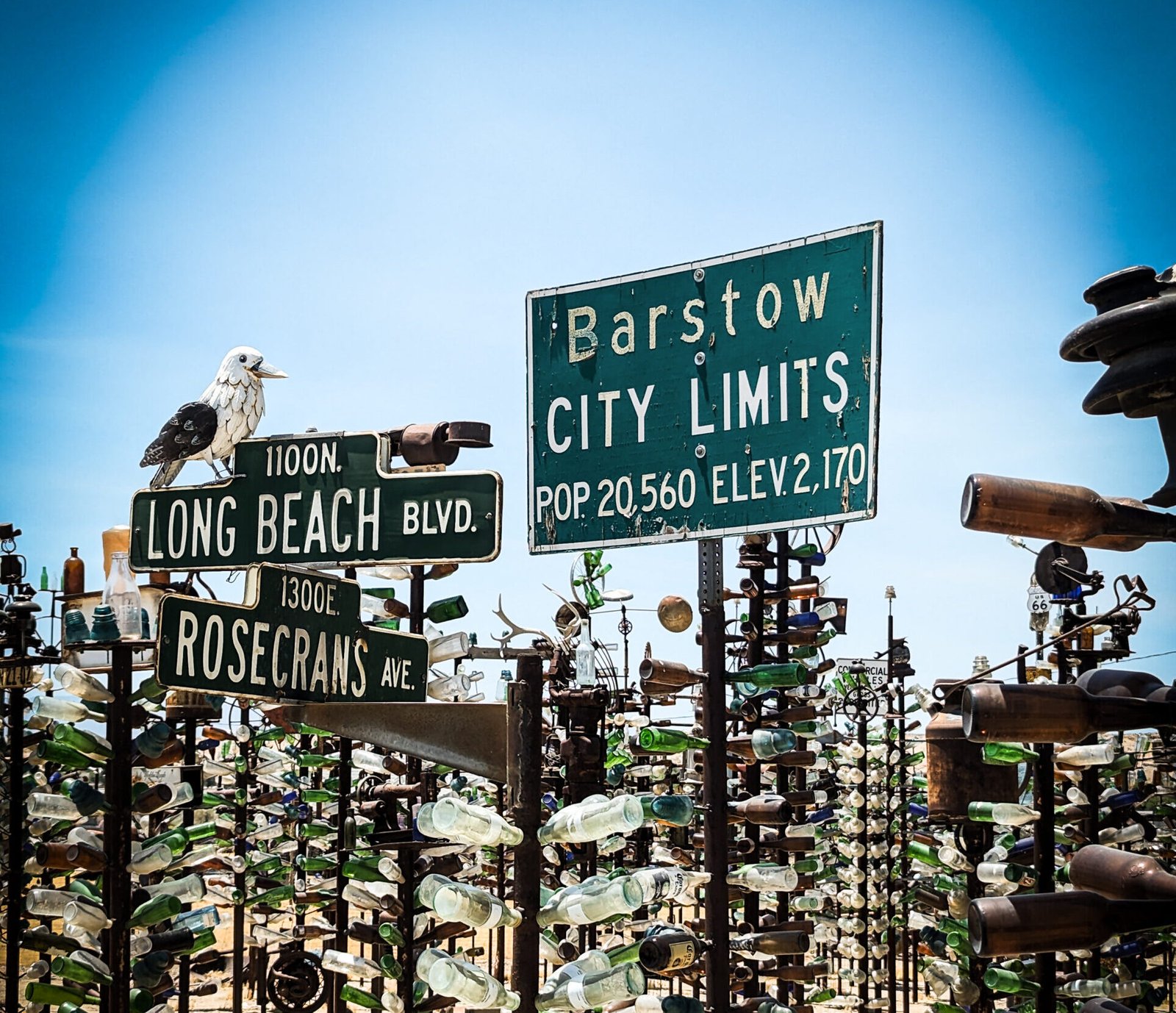
Elmer’s Bottle Tree Ranch (Oro Grande)
In the heart of the Mojave Desert, the late Elmer Long created a "forest" of over 200 sculptures made from pipes and thousands of glass bottles. Each "tree" is topped with a piece of found folk art—old typewriters, signs, or toys. Though Elmer passed away in 2019, his family has worked to keep the ranch open, allowing the wind to whistle through the bottles in a hauntingly beautiful desert symphony.
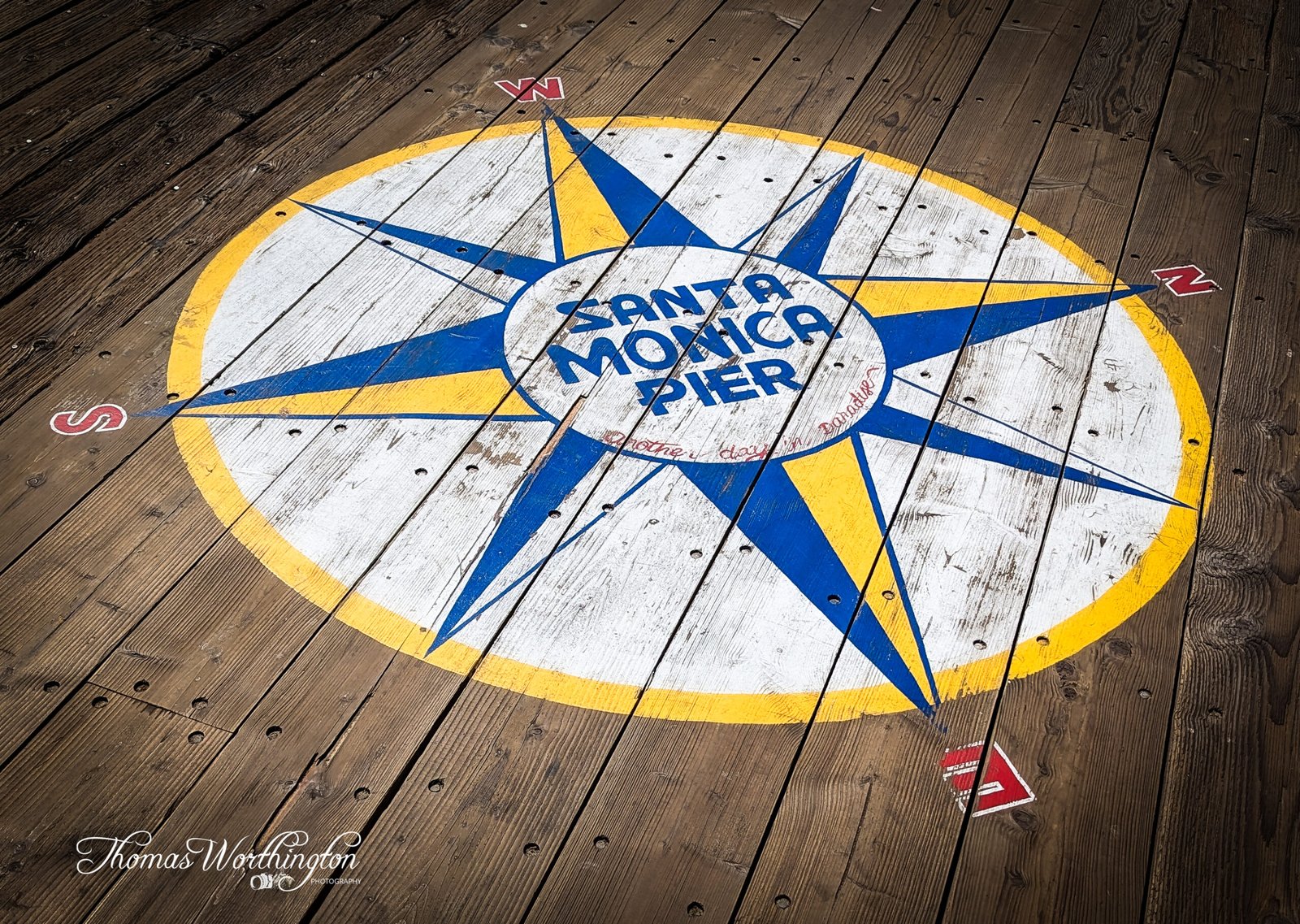
Santa Monica Pier (Santa Monica)
The journey ends where the pavement meets the Pacific. While the route technically ended at an intersection nearby, the Santa Monica Pier was designated the "Official End of the Trail" to give travelers a grander sense of completion. Today, the "66 End of the Trail" sign is the final destination for thousands of travelers each year, marking the emotional conclusion of a 2,448-mile odyssey across the American soul.